
Soups & Stews
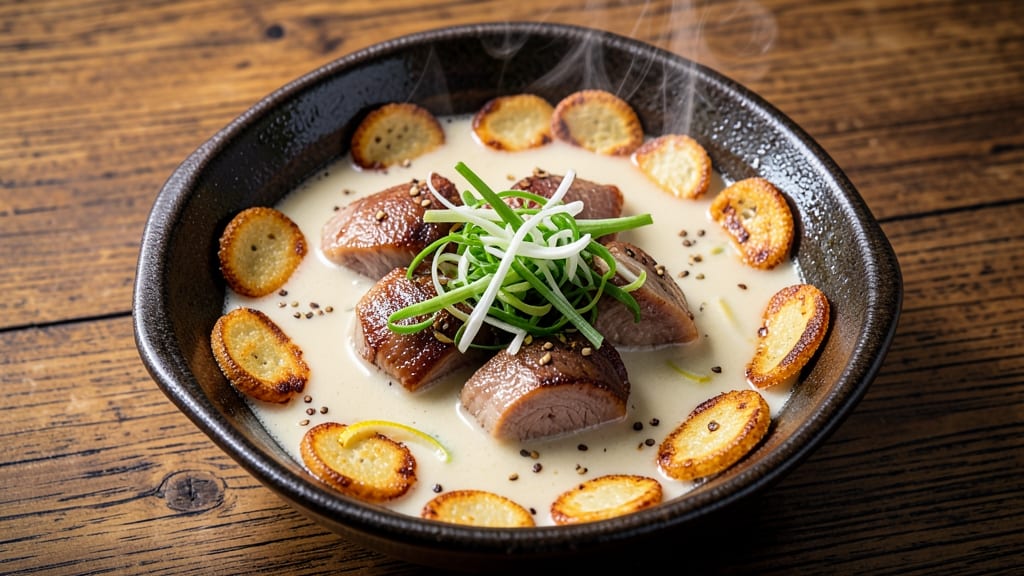
This Beijing-style soup recipe brings the heart of Chinese dining to your kitchen with its fragrant herb broth and signature celery crown crunch. The secret lies in a slow-simmered pork bone broth infused with star anise and ginger, creating layers of umami that define Beijing cuisine.
What sets this apart is the crispy celery crown—a delicate, crunchy topping that adds textural contrast to every spoonful.
Traditional Beijing soups are designed for communal dining, where the broth serves as both meal and medicine. I’ve adapted the classic technique to include a modern twist: a lighter, herb-forward broth that’s equally satisfying for weeknight meals.
The key ingredients—pork bones, celery, and fresh herbs—work together to create a soup that’s deeply comforting yet refined.
The result is a bowl of soup that balances rich, savory broth with bright, crispy celery crowns and tender greens. Each ingredient plays a role: the pork bones build depth, the celery adds crunch, and the herbs bring freshness.
This is the kind of soup that warms the soul and invites seconds.
Perfect for family dinners or gatherings, this recipe scales easily and reheats beautifully. Whether you’re serving it as a starter or a main, the combination of flavors and textures will leave everyone asking for more. Let’s get cooking!
Ingredients for beijing soup
Pork bones, fragrant herbs, and crispy celery crowns create this Beijing-style soup's signature depth and texture.
| Ingredient | Amount | Notes |
|---|---|---|
| Pork Bones 🍖 | 2 lb | Marrow bones preferred for richness |
| Celery Stems 🧅 | 1 whole | For crispy crowns, thick-cut preferred |
| Fresh Ginger Root 🧄 | 1 ½ oz | Peeled, sliced into thin coins |
| Star Anise Pods 🌿 | 4 whole | Whole, not ground |
| Green Onions 🧅 | 1 whole | White and green parts separated |
| Coriander Seeds 🌶️ | 1 tbsp | Toasted for aromatic depth |
| Fresh Cilantro 🌿 | ¼ cup | Stems included for extra flavor |
| Fresh Parsley 🌿 | ¼ cup | Flat-leaf preferred |
| Dried Shiitake Mushrooms 🍄 | 4 whole | Rehydrated for umami |
| Vegetable Oil 🫒 | 2 tbsp | High smoke point preferred |
| Light Soy Sauce 🥄 | 2 tbsp | For seasoning broth |
| Sesame Oil 🫒 | 1 tbsp | For finishing, not cooking |
| Salt 🧂 | 1 ½ tsp | Kosher or sea salt |
| Black Peppercorns 🌶️ | ½ tsp | Crushed lightly |
| Water 💧 | 8 cups | Filtered preferred |
The pork bones are non-negotiable here—marrow bones add richness that can't be replicated. Local Asian markets usually carry them fresh, but most grocery stores stock them too. Look for bones with good marrow content; they should feel heavy for their size. The celery stems need to be thick—2-3 inches in diameter—for that signature crunch. If you can't find thick celery, use two regular stalks per serving. Fresh ginger and star anise are essential for that authentic Beijing aroma. Whole spices always outperform ground versions—don't skip the star anise pods.
No fresh shiitake mushrooms? Dried porcini mushrooms work in a pinch, but rehydrate them first. Running short on cilantro? Fresh basil or mint can substitute at the same quantity, though the flavor will differ slightly. The coriander seeds should be toasted in a dry pan for 30 seconds until fragrant—this releases their full aroma. If you're using pre-sliced ginger from a jar, rinse it well to remove excess preservatives. The soy sauce can be swapped for coconut aminos if you're avoiding gluten, but traditional light soy sauce is preferred for authenticity.
This soup tastes even better the next day as flavors meld. Store broth in the fridge for up to 5 days or freeze for 3 months—it reheats beautifully. The celery crowns crisp up best when fried fresh, but you can par-cook them ahead and finish frying before serving. For meal prep, keep the herbs and celery crowns separate until ready to serve. The broth alone makes a great base for noodles or rice dishes if you have leftovers.
Why You'll Love This Recipe
- Pork Bones Simplify: The bones do all the heavy lifting—just simmer them for hours, and you’ve got rich, gelatinous broth without the fuss of stock pots. I toss in the celery and ginger early, then walk away while it works its magic.
- Star Anise Magic: That one little pod transforms the soup into something deeper than ordinary. It’s not overpowering—just a warm, licorice-kissed backbone that makes every spoonful feel like a hug.
- Leftover Goldmine: This soup only gets better the next day. The flavors meld overnight, and I’ve reheated it for lunch three times without a single complaint from my family (yes, even the picky eater).
- Budget-Friendly Feast: Pork bones are cheap, and a single batch stretches across meals. Add rice or noodles later, and suddenly you’ve fed everyone for days—no takeout menus needed.
Step-by-step instructions for Beijing-style soup
Transform simple ingredients into a deeply aromatic broth with signature celery crowns and umami depth.
Prepare the Celery Crowns and Aromatics
Cut the 1 whole celery stems into ½-inch thick rounds, leaving the base intact to form crowns. This creates the signature crispy texture. In a dry skillet over medium heat, toast the 1 tbsp coriander seeds for 1-2 minutes until fragrant and lightly golden. Transfer to a bowl and let cool.
Peel the 1.5 oz fresh ginger root and slice into ¼-inch thick coins. Separate the 1 whole green onions into white and green parts. The white portions will cook in the broth while the greens will finish the dish. These aromatics form the flavor foundation of this Beijing-style soup.
Build the Broth Base
Heat 2 tbsp vegetable oil in a large pot over medium-high heat. Add the 2 lb pork bones and sear for 5-7 minutes on each side until deeply browned. This caramelization builds rich flavor. Remove bones and set aside temporarily.
In the same pot, add the celery crowns and cook for 3-4 minutes until slightly softened but still crisp. Add the sliced ginger, white parts of green onions, 4 whole star anise pods, and the toasted coriander seeds. Cook for 1 minute until fragrant, stirring constantly to prevent burning.
Simmer the Broth
Pour in the 8 cups water and bring to a boil. Return the pork bones to the pot, then add 2 tbsp light soy sauce and 1.5 tsp salt. Reduce heat to low and simmer uncovered for 3 hours, skimming any foam that rises to the surface. This slow cooking extracts collagen from the bones, creating a velvety texture.
After 2 hours, add the 4 whole dried shiitake mushrooms (rehydrated in hot water for 20 minutes and drained). The mushrooms contribute deep umami that balances the broth's savory notes. The soup should develop a rich, amber color and subtle sweetness from the caramelized aromatics.
Finish and Serve
Strain the broth through a fine-mesh sieve into a clean pot, pressing gently on the solids to extract maximum flavor. Discard the solids. Return the broth to medium heat and add 0.5 tsp crushed black peppercorns. Taste and adjust seasoning with additional soy sauce or salt if needed.
Just before serving, stir in 1 tbsp sesame oil and the reserved green onion tops. Ladle the hot broth into bowls, garnishing each with a sprinkle of 0.25 cup fresh cilantro and 0.25 cup fresh parsley. The celery crowns should be served on the side for crispy contrast with each spoonful of broth.
Pro Tips For Making Beijing Soup
- STEAM THE BONES FIRST: Skip the direct boil—start by simmering pork bones in cold water until the water just reaches a bare simmer (about 20 minutes). This pulls out impurities and fat without scrambling the collagen. I learned this the hard way after making my soup cloudy and greasy the first three times.
- SLICE GINGER THINLY: Don’t chop the ginger into matchsticks—slice it paper-thin (almost translucent) so it infuses flavor without overpowering. Too thick, and you’ll taste it; too thin, and it burns. My grandmother swore by this, and she was right: the aroma is what makes this soup sing.
- DON’T CROWD THE POT: If your pork bones are packed too tightly, they’ll steam instead of brown, and the broth will taste bland. Work in batches if needed—even 3–4 inches of space between bones guarantees a deeper, richer flavor. Sounds weird, but it works: the Maillard reaction is your friend here.
- ADD STAR ANISE LATE: Toss the star anise in with the ginger and celery only in the last 30 minutes of cooking. If you add it early, it’ll turn bitter and overpower the broth. I was skeptical until I tried it—now I can’t imagine skipping this step.
Pro cooking tips for beijing soup
Broth Perfection
Start by searing the pork bones until deeply browned—this is non-negotiable for developing that rich, caramelized depth. Use a large stockpot and work in batches if needed to avoid crowding.
I swear by a heavy-bottomed Dutch oven for even heat distribution. Skim off any foam that rises during the 3-hour simmer—this keeps your broth crystal clear and prevents bitterness. 🌡️
For the celery crowns, cut them ½-inch thick with a sharp knife—thinner slices burn, while thicker ones stay too soft. Fry them in batches in hot oil until golden brown and crisp.
The secret is high heat and minimal oil—just enough to coat the pan. These crowns should be served crispy alongside the soup, not soggy.
Spice Balance
The star anise and toasted coriander seeds are flavor bombs—don’t skip toasting the coriander! Toast them in a dry pan for 30 seconds until fragrant. This releases their aromatic oils, which infuse the broth with warmth.
If you’re sensitive to spice, reduce the black peppercorns to ¼ tsp, but trust me, the balance is perfect as written.
Light soy sauce is your secret weapon here—it adds saltiness and depth without overpowering. If you’re using coconut aminos, reduce it by ½ tsp since it’s saltier. Taste the broth at the 2-hour mark and adjust seasoning—this is when the flavors really start to shine. 💡
Timing Tricks
Add the shiitake mushrooms only after 2 hours of simmering—they’ll break down too much if cooked longer. Rehydrate them in hot water for 20 minutes first, but don’t drain them completely—keep 1 tbsp of soaking liquid to add back to the broth for extra umami.
This step is where the soup gets its meaty, savory punch.
Strain the broth through a fine-mesh sieve, pressing gently on the solids with a spoon. This extracts maximum flavor without making the broth cloudy. For a smoother texture, strain it twice—once through a cheesecloth-lined sieve for ultra-clarity. The first sip should be velvety, not gritty. ✨
Finishing Touches
Stir in sesame oil just before serving—this adds a nutty, aromatic finish that elevates the dish. The green onion tops and fresh herbs should be added last so they stay vibrant.
For an extra touch, drizzle a thin stream of chili oil over each bowl if you love heat. It’s a restaurant-quality detail that takes seconds. 🔥
Serve the soup steaming hot with the celery crowns on the side—let diners add their own for that crunchy contrast. The broth alone is a masterpiece, but the crowns take it to next-level texture.
Trust the process, and you’ll have a bowl that tastes like a Beijing street stall in your kitchen. 💛
Nutrition facts
Frequently asked questions
What makes this Beijing-style soup different from other Chinese soups?
This recipe captures Beijing's signature celery crown crunch and herb-forward broth—unlike Cantonese soups that focus on delicate flavors or Sichuan soups with chili heat. The pork bone broth simmers for 3 hours to create velvety texture, while the toasted coriander and star anise give it that distinct aromatic depth.
Can I make this soup vegetarian?
Yes! Replace pork bones with mushroom stems or kombu seaweed for umami, and use vegetable broth instead of water. Add extra shiitake mushrooms and kelp powder to mimic the meaty depth. The celery crowns and herbs will still shine in a plant-based version.
How do I keep the celery crowns crispy when serving?
Fry them in hot oil just before serving—they'll stay crispy for 10-15 minutes if kept in a 200°F oven while the soup simmers. For extra crunch, sprinkle with cornstarch before frying (toss crowns in 1 tsp cornstarch before cooking). Never soak them—they'll turn soggy.
Can I use chicken bones instead of pork?
Chicken bones create a lighter broth with a cleaner flavor profile. Simmer for 2 hours instead of 3—chicken bones render faster. Add extra ginger and star anise to compensate for the milder taste. The celery crowns and herbs will still complement the broth beautifully.
What's the best way to store leftovers?
Store broth in an airtight container for up to 5 days in the fridge or 3 months in the freezer. Keep celery crowns separate—they'll lose crispness. Reheat broth gently on low heat**, adding a splash of water if it thickens too much. The herbs can be added fresh when reheating.