
Soups & Stews
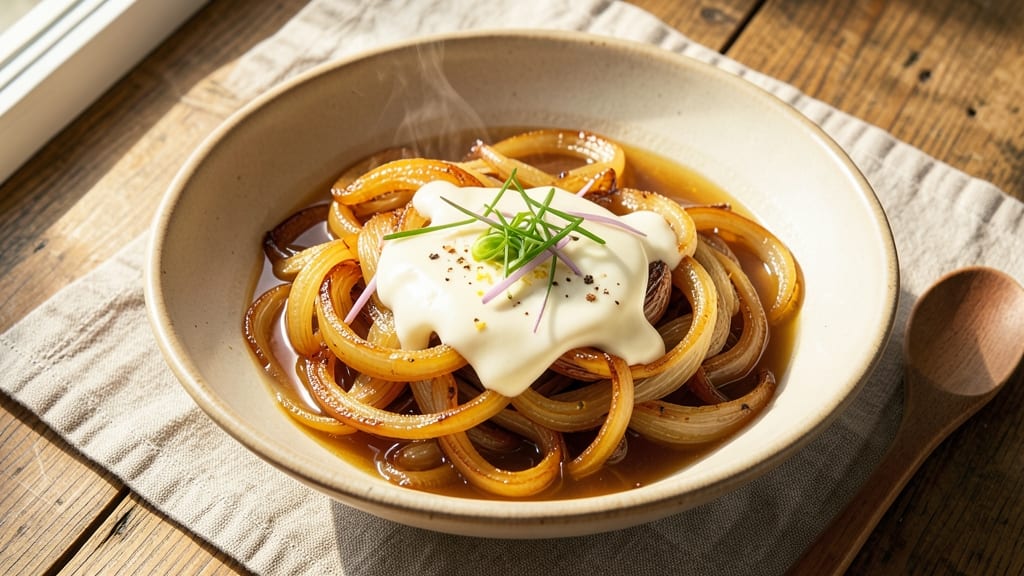
This Benihana Japanese onion soup delivers the restaurant's signature crispy onion layers over a rich miso velout that's impossible to resist. The secret lies in slow caramelization—layering onions until they're golden and sweet, then melting them into a warm, savory broth infused with miso paste for depth.
Every bite balances crispy texture with velvety warmth, making it a standout comfort dish.
The process starts with high-heat sautéing to develop those signature crispy layers, then simmering in a flavorful broth. I use a blend of chicken and vegetable stock for balance, but you can adapt it to beef or even a lighter vegetable base.
The miso velout adds umami richness that elevates simple ingredients into something extraordinary. This isn't just soup—it's a flavor experience that transforms an ordinary meal into something special.
By the time you're done, you'll have perfectly caramelized onion layers floating atop a smooth, aromatic broth with just the right amount of cheese on top. The contrast between the crispy onions and creamy velout creates a harmony that's both comforting and exciting.
It's the kind of dish that disappears faster than you can say "Benihana." Ready to make it?
This recipe works equally well as a starter or main course, especially when paired with crusty bread or a simple salad. The beauty of it lies in its simplicity—just a few key ingredients, but each one plays a crucial role in delivering that signature restaurant flavor at home.
Let's get cooking!
Ingredients for benihana japanese onion soup
Crispy onions, rich miso velout, and perfectly balanced broth—just 13 ingredients for restaurant-style flavor.
| Ingredient | Amount | Notes |
|---|---|---|
| Yellow Onions 🧅 | 3 lb | Yellow or white, sliced into 1/4-inch rings |
| Chicken Broth 💧 | 4 cups | Low-sodium preferred for flavor control |
| Vegetable Broth 🥬 | 2 cups | For balanced flavor profile |
| White Miso Paste 🧈 | 2 tbsp | High-quality, fermented miso preferred |
| Unsalted Butter 🧈 | 4 tbsp | European-style preferred for richness |
| Heavy Cream 🥛 | 1 cup | Full-fat for velvety texture |
| Shredded Sharp Cheddar Cheese 🧀 | 1 cup | Freshly shredded for best melt |
| Garlic Cloves 🧄 | 4 cloves | Minced for aromatic base |
| Olive Oil 🫒 | 2 tbsp | For initial high-heat caramelization |
| Salt 🧂 | 1 ½ tsp | Adjust to taste, kosher preferred |
| Black Pepper 🌶️ | ½ tsp | Freshly cracked for warmth |
| Dried Thyme 🌿 | 1 tsp | Or 1 tbsp fresh thyme leaves |
| Crusty Bread 🍞 | 4 slices | For serving, optional but recommended |
The onions are everything here. Yellow or white work best—they caramelize more evenly than red. Look for firm, dry onions at the store (the heavier, the better). Slice them into even 1/4-inch rings—this ensures consistent crispiness. I grab mine from the produce manager's section—they're usually fresher. Pro tip: Don't skip the olive oil for the initial sauté—it prevents burning while building those golden layers. If you're short on time, pre-slice them while you prep the broth.
No white miso? Red miso at half the amount works in a pinch, but the flavor will be bolder. The broth blend is flexible—all vegetable broth keeps it lighter, while beef broth adds depth. Fresh thyme is ideal, but dried works at one-third the amount. For the cheese, freshly shredded sharp cheddar melts best—pre-shredded gets gummy. The butter matters too: European-style has more fat content, giving that restaurant-quality richness. If you're using salted butter, reduce the added salt by half.
This soup tastes even better the next day—make a double batch and freeze half. Store leftovers in the fridge for 4-5 days or freeze for 3 months. The onions stay crispy when reheated gently—just warm with a splash of broth. For serving, toast the bread while the soup simmers—it soaks up the velout perfectly. Leftovers? I portion them into individual bowls so they're ready to reheat for quick lunches.
Why You'll Love This Recipe
- No-Chop Nightmare: I swear by this recipe when I’m too tired to slice onions properly. Just toss thick onion slices straight into the pan—no tears, no fuss—because the butter and broth do all the work for you.
- Umami Bomb: That white miso paste? It’s the secret weapon. One spoonful and suddenly your soup has this deep, savory punch that makes ordinary broth taste like a Michelin-starred experience.
- Budget Crowd-Pleaser: Feeds four for under $8, and half the ingredients are pantry staples. My roommates and I split a pot after work—no one leaves hungry, and my wallet stays happy.
- Leftovers That Lie: I always make double batches because reheated Japanese onion soup is even better—the onions get sweeter, the broth richer. Honestly, the second night is when this dish truly shines.
Step-by-step instructions for Benihana Japanese onion soup
Here's how to build those iconic crispy onion layers over a rich, umami-packed miso velout.
Caramelize the Onions Until Deep Golden
Heat the 2 tablespoons olive oil in a large, deep skillet over medium-high heat. Add the 3 pounds yellow onions sliced into ¼-inch rings and spread them out in an even layer. Cook undisturbed for 10 minutes until the onions begin to soften and release moisture.
Reduce heat to medium and continue cooking, stirring occasionally, for 30-40 minutes until the onions turn a deep golden brown with crispy edges. This slow caramelization develops sweet, complex flavors. If they brown too quickly, lower the heat—you want even cooking, not burning. I press down gently with a spatula during the first 15 minutes to help them crisp faster.
Build the Miso Velout Base
Once the onions are perfectly caramelized, remove half of them (about 1½ pounds) and set aside for the final layer. In the same skillet, melt 2 tablespoons unsalted butter over medium heat. Add the 4 cloves minced garlic and cook for 30 seconds until fragrant.
Whisk in the 2 tablespoons white miso paste and cook for 1 minute to toast the miso slightly. Pour in the 4 cups chicken broth and 2 cups vegetable broth, scraping up any browned bits from the bottom. Bring to a gentle simmer and let it reduce by half—about 10-12 minutes—until the liquid thickens slightly but remains velvety.
Finish with Cream and Cheese
Reduce heat to low and stir in the 1 cup heavy cream and 1 cup shredded sharp cheddar cheese. Add the 1.5 teaspoons salt, 0.5 teaspoon black pepper, and 1 teaspoon dried thyme. Let the mixture simmer gently for 2-3 minutes until the cheese melts completely and the sauce becomes smooth and glossy.
Taste and adjust seasoning—this is where the soup's depth comes together. The miso adds umami, the cheese brings richness, and the caramelized onions contribute sweetness. If the sauce is too thick, whisk in 1-2 tablespoons hot broth to reach your desired consistency.
Layer and Crisp the Topping
Return the reserved caramelized onions to the skillet and stir gently to warm through. Spoon the soup into 4 deep bowls, then top each with a generous layer of the crispy onions. For extra drama, I like to arrange them in concentric circles, creating a beautiful onion "flower" on top.
Place the bowls under a broiler for 2-3 minutes until the onions turn deep golden brown and crisp up again. Watch carefully—they burn quickly under direct heat. Serve immediately with the 4 slices crusty bread on the side for dipping.
Pro Tips For Making Benihana Japanese Onion Soup
- Slice Onions Thinly First: I learned this the hard way—thick onion slices end up chewy and undercooked. Use a sharp knife to cut them paper-thin (about 1/8-inch) before frying, so they soften evenly in the butter without turning to mush. This is the thing that actually changes the texture from sad to silky.
- Melt Butter Low and Slow: High heat burns butter fast, and that bitter taste ruins the whole dish. Cook the onions in butter over medium-low heat until golden—about 8-10 minutes—then crank it up just for the last minute to caramelize. Sounds counterintuitive, but trust the process.
- Whisk Miso Smoothly: Lumpy miso paste makes the soup taste like you skipped a step. Before adding it to the broth, whisk it into a little cold water or broth first to dissolve completely. This isn’t the prettiest method, but it works every time—no gritty surprises.
- Simmer, Don’t Boil: Boiling the broth after adding miso kills the flavor. Once everything’s combined, reduce heat to a gentle simmer (tiny bubbles, no rolling) and let it sit for 5 minutes. Your future self will notice the difference—smoother, richer, and way more balanced.
Make-ahead tips for this recipe
Prep Ahead Secrets
Slice all 3 pounds of onions into ¼-inch rings and store them in an airtight container in the fridge for up to 2 days before cooking. This saves time and keeps the onions fresh for perfect caramelization.
I like to pre-slice them while I prep the broth base—it's a game-changer for busy weeknights. 💡
Broth Prep
Make the broth mixture ahead and store it in the fridge for 3 days or freeze it for 3 months.
Combine the 4 cups chicken broth, 2 cups vegetable broth, 2 tbsp white miso paste, 1.5 tsp salt, and 0.5 tsp black pepper in a container. When ready to cook, simply heat it up and proceed with the recipe.
Onion Caramelization
For a shortcut, partially caramelize the onions in advance. Cook them until golden brown, then store them in the fridge for 1 day or freeze for 2 months. Reheat them gently in the skillet before adding them back to the soup.
This method still delivers that signature crispy texture, just with less active cooking time on the day you serve. ✨
Cheese Prep
Shred the 1 cup sharp cheddar cheese and store it in a sealed container in the fridge for up to 3 days. Freshly shredded cheese melts beautifully and avoids the gummy texture of pre-shredded cheese.
I also like to grate the cheese myself—it's a small effort that makes a big difference in the final result.
Freezer-Friendly Soup
Assemble the entire soup (without the final crispy onion layer) and freeze it in an airtight container for up to 3 months. When ready to serve, thaw it in the fridge overnight, then reheat it gently on the stovetop.
Add the crispy onions fresh from the oven or skillet just before serving to maintain their perfect texture. 🥶
Bread Pairing
Toast the 4 slices crusty bread ahead of time and store them in a paper bag at room temperature for up to 2 days. This ensures they're always ready to serve alongside the soup.
I like to keep a stash of baguettes on hand—just slice and toast them as needed for that perfect crunch. 🍞
Nutrition facts
Frequently asked questions
Can I make this Japanese onion soup without miso paste?
Yes! If you don't have miso, substitute with 2 tablespoons soy sauce for umami depth or 1 teaspoon fish sauce for a more savory note. For a vegetarian option, use 1 tablespoon nutritional yeast mixed with 1 teaspoon garlic powder. The soup will still be delicious, though the authentic miso velout flavor will be different.
How do I prevent the onions from burning while caramelizing?
Start with medium heat and reduce to low-medium once the onions begin softening. Stir occasionally and press them down gently with a spatula during the first 15 minutes to help them crisp evenly. If they brown too quickly, lower the heat further. Patience is key—rushing leads to burnt edges.
Can I use a different type of cheese besides sharp cheddar?
For extra richness, try Gruyère or Parmesan (use ½ cup each for a balanced flavor). If you prefer a milder taste, Monterey Jack works well. Just shred it fresh—pre-shredded cheese melts poorly. The cheese should complement the miso velout, not overpower it.
Is this soup suitable for a crowd, or should I double the recipe?
This recipe serves 4 generously, but it's easy to scale up! For 8 servings, double all ingredients except the thyme (use 2 teaspoons) and black pepper (use 1 teaspoon). Use a larger skillet or divide the onions between two pans to ensure even caramelization. The extra effort is worth it for gatherings!
What’s the best way to reheat leftovers without losing crispiness?
Reheat the soup (without the crispy onion topping) in a saucepan over low heat until warm. For the onions, reheat them separately in a dry skillet over medium heat for 2-3 minutes until crispy again. Add them fresh to the soup just before serving to maintain that perfect texture contrast.