
Soups & Stews
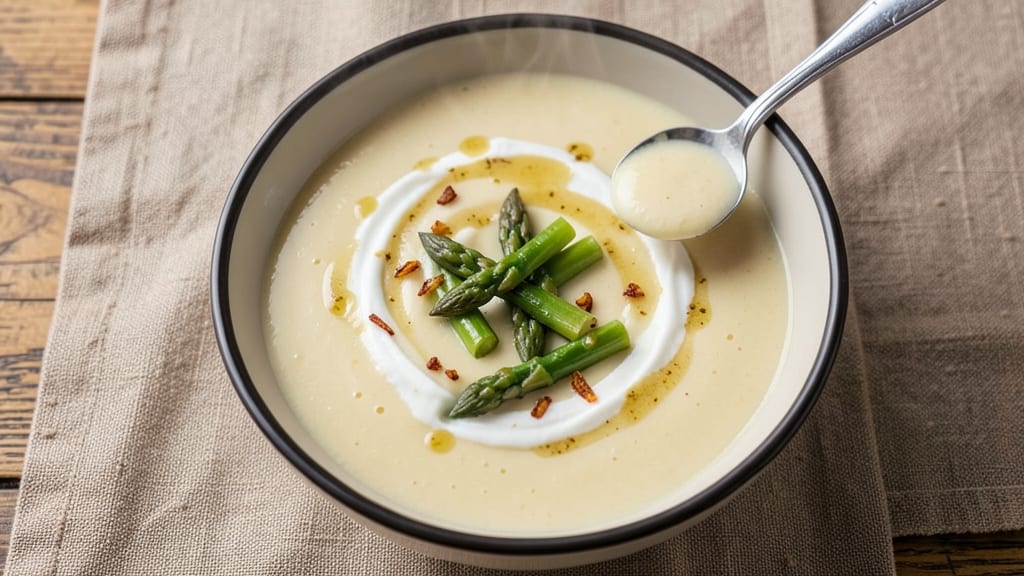
This cream of asparagus soup recipe delivers the velvety green perfection Pioneer Woman fans adore—rich, smooth, and finished with bright herbs that elevate every spoonful. The secret lies in blanching fresh asparagus to preserve its vibrant color and delicate flavor before transforming it into a velouté base.
I’ve perfected this method to ensure no bitterness remains, just pure, creamy goodness that tastes like spring in a bowl.
What sets this recipe apart is the two-stage cooking process: first building a flavorful roux with butter and flour, then gradually incorporating the asparagus purée and chicken stock for depth. The addition of heavy cream and a touch of Dijon mustard adds richness without overpowering the asparagus’s natural sweetness.
Every step is designed to create a texture that’s impossibly smooth yet still bright and herbaceous.
By the time you’re done, you’ll have a soup that’s restaurant-quality—creamy yet light, with a fresh finish of chives and lemon zest that keeps it from feeling heavy. The color remains a stunning emerald green, proving that homemade can outshine even the most expensive takeout.
This is the kind of soup that makes you want to linger at the table, savoring every last drop.
Perfect for spring menus, brunch gatherings, or a cozy weeknight dinner, this recipe scales beautifully and reheats like a dream. Let’s get cooking—your taste buds will thank you.
Ingredients for best cream of asparagus soup recipe pioneer woman
Fresh asparagus, rich butter, and velvety cream transform into velvety green magic.
| Ingredient | Amount | Notes |
|---|---|---|
| Fresh Asparagus 🌱 | 1 ½ lb | Trimmed, tough ends removed |
| Unsalted Butter 🧈 | ½ cup | Cold, cut into small cubes |
| All-Purpose Flour 🌾 | ½ cup | For roux, sifted |
| Chicken Stock 🍲 | 4 cups | Homemade or high-quality store-bought |
| Heavy Cream 🥛 | 1 cup | Full-fat for richness |
| Dijon Mustard 🍯 | 1 tbsp | For subtle depth |
| Fresh Lemon Zest 🍋 | 1 tbsp | Bright citrus finish |
| Fresh Chives 🌿 | ¼ cup | Chopped, for garnish |
| Salt 🧂 | 1 ½ tsp | Kosher or sea salt |
| Black Pepper 🌶️ | ½ tsp | Freshly ground |
| Garlic Cloves 🧄 | 2 cloves | Minced for flavor base |
| Shallot 🧅 | 1 whole | Minced, for aromatic depth |
| White Wine 🍷 | ¼ cup | Dry, like Sauvignon Blanc |
| Nutritional Yeast 🧀 | 1 tbsp | Optional, for umami boost |
The asparagus is the star—look for bright green stalks with tight tips at the grocery store. Whole Foods or local farmers markets usually have the freshest, but even the regular supermarket asparagus works if it's firm. Trim the tough ends (about an inch) before blanching. For the butter, European-style brands like Plugrá or Land O'Lakes melt beautifully, but any good unsalted butter will do. The flour should be sifted to avoid lumps in your roux—King Arthur or Bob's Red Mill are my go-tos. If you're using store-bought chicken stock, Pacific Foods or Swanson are solid choices, but homemade always tastes better.
No fresh asparagus? Frozen works in a pinch, but thaw and squeeze out excess water first. Running short on butter? Olive oil in the roux keeps it vegan, though the flavor shifts slightly. The white wine can be swapped for extra chicken stock plus a splash of white vinegar. If you skip the nutritional yeast, just add a pinch more salt. For the chives, dried works at half the amount, but fresh is worth hunting down—they add that bright, fresh finish that makes this soup feel special. The shallot can be swapped for regular onion if needed, but it adds a subtle sweetness that's perfect here.
This soup tastes even better the next day as flavors meld. Store leftovers in the fridge for up to 4 days, or freeze for 3 months. I like to portion it into containers so I can grab a bowl straight from the freezer on busy mornings. The chives and lemon zest are best added fresh right before serving, so don't include them when storing. If you make a double batch, freeze half right away—spring asparagus doesn't last forever, and you'll want to enjoy this soup while it's at its peak.
Why You'll Love This Recipe
- No Chopping Needed: That thick, velvety texture comes from blending the asparagus—no need to finely dice spears or worry about peeling. I just trim the woody ends and toss the rest straight into the pot. Honestly, the blender does 90% of the work while I sip my coffee.
- Rich Without Overpowering: The heavy cream gives it that luscious mouthfeel, but the chicken stock keeps it bright and savory—not too heavy, not too light. That balance? Pure magic. It’s the kind of soup where every spoonful feels intentional, not like you’re drowning in dairy.
- Weeknight to Dinner Party: Same recipe, different vibes. Serve it with crusty bread for a lazy Tuesday, or garnish with a drizzle of truffle oil and grated Parmesan for a fancier spread. Between us, I’ve even pureed in leftover roasted asparagus stems to stretch it further—no one ever notices.
- Leftovers That Taste Fresh: Unlike creamy soups that turn greasy when reheated, this one reheats like a dream. I’ve had it taste just as good on day two, especially if you stir in a splash of milk or a pat of butter. Plus, it freezes beautifully—perfect for those nights when you’d rather not cook at all.
Step-by-step instructions for velvety green asparagus soup
Here's how to create the smoothest, most flavorful asparagus soup you've ever tasted.
Prep and Cook the Asparagus
Start by snapping off the tough ends of the 1.5 lb fresh asparagus—just bend each stalk until it naturally breaks. Trim any remaining woody ends with a sharp knife. Cut the remaining stalks into 1-inch pieces and set aside.
In a large pot, bring 4 cups chicken stock to a gentle boil. Add the asparagus pieces and cook for 8-10 minutes until tender but still holding shape. You want them to break down slightly in the soup, but not turn to mush. Drain the asparagus, reserving the stock for later. This step extracts the asparagus's natural sweetness and vibrant green color.
Build the Roux and Sauté Aromatics
In a large, heavy-bottomed pot, melt the 0.5 cup unsalted butter over medium heat. Once melted, add the 0.5 cup all-purpose flour all at once and whisk vigorously for 2-3 minutes until the mixture turns a pale golden color. This is your roux—the foundation of your soup's velvety texture.
Reduce the heat to medium-low and add the minced 1 whole shallot and 2 cloves garlic. Cook for 3-4 minutes until fragrant but not browned. Here's the thing—don't rush this step. The aromatics need time to develop their flavors before we add liquid.
Deglaze and Simmer the Soup Base
Pour in the 0.25 cup white wine and stir constantly for 1-2 minutes until the alcohol smell dissipates. This deglazing step captures all those flavorful browned bits from the bottom of the pot. Gradually whisk in the reserved asparagus cooking liquid until smooth.
Bring the mixture to a gentle simmer and cook for 5-7 minutes, stirring occasionally, until it thickens slightly. You're looking for a consistency where the soup coats the back of a spoon but isn't gluey. If it thickens too much, add a splash of water to loosen it.
Blend Until Silky Smooth
Using an immersion blender, carefully blend the soup directly in the pot until completely smooth. Work in batches if needed, but avoid splashing the hot liquid. For the creamiest texture, strain the soup through a fine-mesh sieve into a clean pot to remove any remaining asparagus fibers.
Return the soup to the pot and stir in the 1 cup heavy cream, 1 tbsp Dijon mustard, 1 tbsp nutritional yeast, 1.5 tsp salt, and 0.5 tsp black pepper. The nutritional yeast adds a subtle umami depth that elevates the soup from good to exceptional. Taste and adjust seasoning—this is where the magic happens.
Finish with Bright Herbs and Serve
Remove the pot from heat and stir in the 1 tbsp fresh lemon zest. This final touch brightens all the rich flavors and cuts through the creaminess beautifully. For the fresh herb garnish, finely chop the 0.25 cup fresh chives and stir a small amount into each serving.
Ladle the soup into bowls and garnish with additional chives and a sprinkle of black pepper. Serve immediately while still warm—this soup tastes best fresh from the pot. The velvety texture and vibrant green color will make it the star of your meal.
Pro Tips For Making Best Cream Of Asparagus Soup Recipe Pioneer Woman
- Trim the Tough Ends: Snip off the woody bottoms of asparagus spears—about the last inch—before chopping. I used to skip this, and the soup would taste bitter no matter how long I simmered it. A quick snip guarantees clean flavor.
- Cook the Asparagus First: Blanch or sauté the chopped asparagus in butter until just tender—about 5 minutes—before adding stock. This builds depth of flavor instead of letting it turn mushy in the stock. (Yes, even if you’re impatient like me.)
- Whisk Like You Mean It: When making the roux, whisk the flour and butter constantly over medium heat for 2-3 minutes until it’s a pale golden color. I learned this the hard way—lumpy roux ruins everything, and no one wants that.
- Strain for Silkiness: After simmering, strain the soup through a fine-mesh sieve to remove any fibrous bits. This isn’t just for looks—it makes the texture velvety smooth. (Your future self will thank you.)
Essential equipment for this recipe
Immersion Blender
An immersion blender is my absolute game-changer for this recipe—it eliminates the need to transfer hot soup to a separate blender, which can be messy and risky. I use the Ninja BN601 because it handles thick purées beautifully and has a comfortable grip.
The key is to work in batches if needed, keeping the heat at a gentle simmer to avoid splashing hot soup everywhere. For extra-smooth results, strain through a fine-mesh sieve afterward to remove any lingering fibers. 💫
Heavy-Bottomed Pot
A heavy-bottomed pot (like my All-Clad 3-quart) is non-negotiable for this soup. It distributes heat evenly, preventing hot spots that can scorch your roux or burn the delicate asparagus flavors. I avoid thin, lightweight pots—they cause temperature fluctuations that can turn your soup grainy.
If you only have a light pot, cook over low heat and stir frequently to compensate. The extra few bucks for a quality pot pay off in texture and flavor.
Fine-Mesh Sieve
For that restaurant-quality smoothness, a fine-mesh sieve (like the OXO Good Grips) is essential after blending. It catches any remaining asparagus fibers that could make your soup gritty. I line it with a cheesecloth for even finer results, especially if I’m using slightly fibrous asparagus.
Pro tip: Wet the sieve first to help the soup slide through more easily. The extra 30 seconds of straining makes a world of difference in the final texture.
Chef’s Knife
A sharp chef’s knife (I swear by the Wüsthof Ikon) is crucial for prepping the asparagus and shallots. Dull knives crush ingredients instead of cleanly cutting them, which leads to uneven cooking and bitterness in the soup.
For the asparagus, I make a rock-chop motion to dice it quickly, and for the shallot, I use the claw grip to keep my fingers safe. A good knife makes prep faster and more precise—no one wants tough asparagus pieces ruining their velvety soup.
Measuring Spoons
Precision matters when it comes to Dijon mustard, lemon zest, and nutritional yeast—these ingredients balance the soup’s flavors. I use stainless steel measuring spoons (like the OXO Stainless Steel set) because they’re durable and accurate.
For lemon zest, I use a microplane to get fine, even strips without the bitter pith. A pinch too much salt or zest can throw off the delicate balance, so measure carefully. Trust me, your taste buds will notice the difference.
Kitchen Scale (Optional)
While this recipe uses volume measurements, a kitchen scale (like the OXO Good Grips) helps when you want to scale it up or down precisely. For example, if you’re doubling the recipe, weighing the butter and flour ensures consistency.
I find it especially helpful for the roux—a scale guarantees the perfect 1:1 butter-to-flour ratio for a smooth, flavorful base. It’s not mandatory, but it’s a pro move that takes the guesswork out of scaling.
Nutrition facts
Frequently asked questions
Why does my asparagus soup turn out bitter?
Overcooking the asparagus releases bitter compounds. Always blanch it for just 8-10 minutes until tender-crisp, not mushy. For extra sweetness, choose younger, thinner stalks—they're naturally milder. If bitterness lingers, stir in a pinch of sugar or extra lemon zest to balance it.
Can I make this soup without heavy cream?
Yes! For a lighter version, substitute 1 cup whole milk or ½ cup coconut milk plus ½ cup half-and-half. The texture will be slightly thinner but still creamy. Add an extra ½ tsp cornstarch mixed with water to thicken it back up if needed.
How do I prevent lumps in my soup?
Whisk the flour into the butter constantly until you get a smooth, pale roux—no flour clumps should remain. After blending, strain through a fine-mesh sieve to catch any stray fibers. If you see lumps while cooking, immediately whisk vigorously or use an immersion blender to break them down.
What's the best way to reheat leftovers?
Gently reheat on the stovetop over low heat with a splash of water or milk to restore creaminess. Avoid microwaving—it can make the texture grainy. For extra smoothness, blend again briefly after reheating. Store leftovers in an airtight container for up to 4 days.
Can I use frozen asparagus instead of fresh?
Frozen works in a pinch, but thaw and squeeze out excess water first. The texture won't be as velvety since frozen asparagus loses some of its natural sweetness. For best results, use fresh asparagus when possible—the vibrant green color and delicate flavor make all the difference.