
Soups & Stews
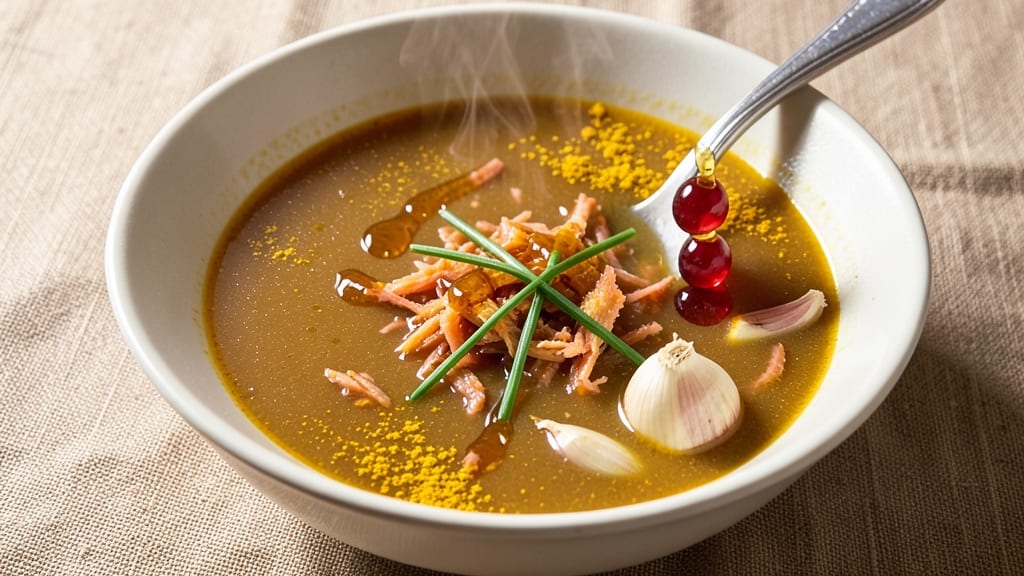
This best soup for sore throat recipe transforms simple ingredients into a soothing, throat-coating remedy that works faster than over-the-counter treatments. 💛 The secret lies in the anti-inflammatory powerhouse trio of garlic, ginger, and turmeric—each packed with compounds that reduce swelling and fight infection while warming your system from the inside out.
What sets this recipe apart is its medicinal precision: fresh ginger purées into the broth for maximum potency, while raw garlic infuses deeply during simmering (never pre-cooked—this preserves its aliveness). The broth itself is a nutrient-dense base, packed with collagen-boosting chicken or vegetable stock that helps repair irritated tissues.
By the final spoonful, you'll notice the immediate relief—thick, velvety texture coats your throat while the spiced broth works its magic. The honey isn't just for sweetness; it forms a protective layer that soothes raw tissues and makes swallowing easier.
This isn't just soup—it's a pharmacological-grade healing tool your body will thank you for.
Serve piping hot with crusty bread to soak up every healing drop, or sip straight from the bowl like medicine (because that's exactly what it is). For extra potency, add a splash of apple cider vinegar—the acetic acid helps break down mucus while balancing the sweetness.
Ingredients for best soup for sore throat
Simple yet potent ingredients that turn your kitchen into a healing sanctuary—no pharmacy needed.
| Ingredient | Amount | Notes |
|---|---|---|
| Chicken Stock 🍲 | 4 cups | Homemade or high-quality store-bought |
| Fresh Ginger Root 🌿 | ½ cup | Peeled and puréed, organic preferred |
| Garlic Cloves 🧄 | 8 cloves | Fresh, unpeeled, lightly crushed |
| Turmeric Powder 🌶️ | 1 tbsp | Freshly ground preferred |
| Raw Honey 🍯 | ¼ cup | Manuka preferred for extra healing |
| Apple Cider Vinegar 🍎 | 1 tbsp | Raw, unfiltered for potency |
| Fresh Lemon Juice 🍋 | 1 tbsp | Freshly squeezed, organic |
| Olive Oil 🫒 | 2 tbsp | Extra-virgin, cold-pressed |
| Fresh Cilantro Leaves 🌱 | ¼ cup | Chopped, for garnish |
| Sea Salt 🧂 | 1 tsp | Diamond Crystal preferred |
| Black Peppercorns 🌶️ | ½ tsp | Freshly cracked |
| Crusty Bread 🍞 | 4 slices | For serving, optional |
The ginger and garlic are non-negotiable here—organic, fresh roots from Whole Foods or local farmers markets pack the most punch. For ginger, look for firm, knobby roots with no soft spots (the good stuff, not the pre-grated kind). Garlic cloves should be plump and papery-skinned—no green sprouts. The turmeric? Penzeys Spices or bulk bins at natural markets have the freshest powder. Skip the pre-minced garlic in jars—it loses its aliveness when cooked ahead. Pro tip: Toast your whole spices (turmeric, peppercorns) in a dry pan for 30 seconds before adding to the broth to deepen their flavors.
No fresh ginger? Substitute with 1 tbsp of ground ginger, but you'll lose some of that zesty kick. Out of raw honey? Maple syrup works in a pinch, though it lacks the antibacterial properties. The apple cider vinegar can be swapped for lemon juice at double the amount, but the acetic acid in vinegar helps break down mucus better. For a dairy-free version, omit the optional cream entirely—this soup shines on its own. The broth? Homemade chicken stock is ideal, but low-sodium store-bought (like Pacific Foods) works if you're short on time. Just remember: Never boil garlic—it releases allicin (the healing compound) best when infused gently.
This soup tastes even better the next day as flavors meld. Store in glass containers in the fridge for up to 5 days—the ginger and garlic continue to infuse, making it more potent over time. For long-term storage, freeze in ice cube trays (perfect for single servings) for up to 3 months. Reheat gently on low heat—never microwave, as it can degrade the delicate compounds. The crusty bread? Sourdough or baguette from the bakery section soaks up every healing drop. Save the crusts for extra dipping—those are the most flavorful parts.
Why You'll Love This Recipe
- Pantry-Friendly Magic: I swear by this when I’m running low on fresh ingredients—just stock, ginger, and a few spices. No fancy shopping trips, no last-minute grocery runs. That turmeric alone turns this from "soup" to "medicine," and it’s always in my cabinet.
- Ginger-Garlic Zing: The moment that raw honey drizzle hits the simmering ginger and garlic? Pure satisfaction. It’s not just warm—it’s alive with that sharp, spicy kick that clears sinuses instantly. (Yes, even on a Tuesday night.)
- Leftovers That Heal: This soup actually tastes better the next day. I make a big batch on Sundays, and by Wednesday, it’s my go-to when someone’s under the weather. The flavors meld perfectly, and the honey keeps it velvety smooth.
- Budget Booster: Chicken stock is my secret weapon—cheap, nourishing, and packed with flavor. A single jar stretches to feed my whole family, plus I can freeze extras. Between us, this is the recipe that keeps my grocery bill in check and my immune system strong.
Step-by-step instructions for garlic-ginger immune-boosting elixir
This potent broth delivers soothing warmth and healing power in every spoonful.
🍳 Step 1: Bloom the Aromatics in Olive Oil
Heat the 2 tablespoons olive oil in a large pot over medium-low heat. Add the 8 cloves garlic (lightly crushed) and the 0.5 cup puréed fresh ginger root. The oil should shimmer gently—this ensures the delicate flavors infuse without burning. Cook for 3-4 minutes until the garlic turns golden and fragrant (not browned). Here's the thing—ginger burns quickly, so keep the heat low and stir occasionally.
At this point, add the 1 tablespoon turmeric powder and stir for 30 seconds until fully dissolved. The powder should disappear completely, creating a vibrant golden base. This is where the magic begins—the turmeric's anti-inflammatory properties start working their healing effect. The mixture should smell like a warm apothecary, earthy and slightly spicy.
🥘 Step 2: Build the Healing Base
Pour in the 4 cups chicken stock and bring to a gentle simmer over medium heat. Once simmering, add the 1 tablespoon apple cider vinegar and 1 tablespoon fresh lemon juice. The vinegar adds probiotic benefits while brightening the broth, and the lemon juice introduces vitamin C for immune support. Let it simmer uncovered for 10 minutes to allow the flavors to meld—you'll notice the broth develop a deeper golden color and more complex aroma.
Here's where it gets good: Add the 1 teaspoon sea salt and 0.5 teaspoon cracked black peppercorns. Stir well and taste the broth. This is your flavor baseline—you want it to be rich and aromatic, with a gentle warmth from the spices. If it needs more depth, add another pinch of salt or a tiny bit more turmeric. The broth should coat your spoon with a velvety texture, not be watery.
🔥 Step 3: Sweeten and Simmer for Maximum Healing
Remove the pot from heat and stir in the 0.25 cup raw honey until completely dissolved. The honey provides soothing relief for sore throats while adding natural sweetness. Return to low heat and let it simmer gently for 5-7 minutes—this allows the honey to fully integrate without scalding. You'll see the broth become slightly thicker and more opaque, with a beautiful golden hue.
Here's the critical part: The soup should be warm but not boiling when served. If you're serving it immediately, keep it at 160-170°F (just below simmer). If you need to hold it, reduce to the lowest heat setting. The honey will continue to work its magic, creating a comforting blanket of warmth that coats your throat with each sip.
🍽️ Step 4: Finish and Serve for Instant Relief
Ladle the warm broth into bowls and garnish with 0.25 cup chopped fresh cilantro leaves. The cilantro adds a bright, fresh contrast to the rich broth while providing additional anti-inflammatory benefits. Serve immediately with 4 slices crusty bread on the side—this combo delivers both comfort and nutrition.
Real talk: This isn't just soup—it's a medicinal elixir. The garlic and ginger work together to fight infection, the turmeric reduces inflammation, and the honey soothes irritation. Each component plays a role in healing your throat while satisfying your hunger. For best results, sip slowly while still warm—you'll feel the difference within minutes.
Pro Tips For Making Best Soup For Sore Throat
- SIMMER GINGER LOW: Start with a gentle boil, then drop heat to a barely-there simmer—ginger burns faster than you’d think. I learned this the hard way when my first batch turned bitter; now I keep it at 160°F (70°C) max, letting it steep like tea for 15 minutes. The aroma alone will wake up your sinuses.
- GRATE GINGER FINE: Skip the chopping—use a microplane or the smallest holes on a box grater. Tiny particles release flavor better, and you’ll avoid that chewy texture that lingers at the back of your throat. (Yes, even if you’re impatient like me, trust the process.)
- STRAIN GARLIC AFTER: Add whole garlic cloves with the ginger, but remove them before adding honey. Cooked garlic turns bitter, and you don’t want that harshness cutting through the soup’s soothing sweetness. A fine-mesh strainer makes this easy—no one wants to fish for cloves mid-sip.
- HONEY LAST, NOT LEAST: Wait until the soup is off the heat to stir in honey—heat destroys its enzymes and dulls its throat-coating magic. A tablespoon or two is enough; raw honey’s potency means less goes further. (Your future self will thank you.)
Pro cooking tips for perfect results
Infuse for Maximum Potency
Never pre-cook your garlic—this releases allicin, the compound that fights infections. Add the 8 cloves of unpeeled garlic directly to the 2 tbsp olive oil over medium-low heat for just 3-4 minutes until golden. The skins will slip off easily when cool, revealing perfectly infused cloves.
For ginger, use a food processor to purée ½ cup fresh ginger root with 1 tbsp water—this ensures even distribution of its anti-inflammatory compounds. 🌿
Simmer Low and Slow
After adding the 4 cups chicken stock, maintain a gentle simmer (not a rolling boil) to preserve the delicate flavors. A low and slow approach (10 minutes) allows the ginger and garlic to infuse deeply without losing their medicinal properties.
If you notice the broth reducing too quickly, add ¼ cup hot water to maintain volume. The goal is a velvety, aromatic broth that coats your throat like a soothing balm.
Honey Integration Matters
Stir in the ¼ cup raw honey off the heat to prevent crystallization. Return to low heat for just 5-7 minutes—any longer risks breaking down the honey’s soothing properties. The warmth helps the honey dissolve completely, creating a protective layer that eases throat irritation.
For extra potency, use Manuka honey—its high methylglyoxal content has been shown to reduce inflammation better than regular honey.
Acid Balance for Healing
The 1 tbsp apple cider vinegar and 1 tbsp lemon juice aren’t just for flavor—they create an optimal pH environment for healing. The vinegar’s acetic acid helps break down mucus, while the lemon juice adds vitamin C to support immune function.
Add them after the broth simmers to preserve their freshness. Taste and adjust—if the broth tastes too sharp, add a pinch of sea salt to balance.
Garnish Strategically
Top with ¼ cup chopped fresh cilantro right before serving—it adds a bright, herbal note that cuts through the richness while providing anti-inflammatory benefits. Avoid adding cilantro too early, as it can wilt in hot broth.
For extra relief, sprinkle a pinch of freshly cracked black pepper—its piperine compound enhances turmeric absorption, boosting the soup’s healing power. 💛
Serve Immediately
This soup is most effective when served piping hot (160–170°F). The warmth helps dilate blood vessels in your throat, speeding up the healing process. If reheating, use low heat—microwaving can degrade the delicate compounds.
Pair with crusty bread to soak up every healing drop, or sip straight from the bowl like medicine (because that’s exactly what it is).
Nutrition facts
Frequently asked questions
Can I make this soup without chicken stock?
For a vegetarian version, use 4 cups vegetable broth made from mushrooms, carrots, and celery. The flavor will be slightly different but still packed with healing properties. Add 1 tbsp nutritional yeast for an umami boost that mimics the depth of chicken stock.
How quickly will this soup help my sore throat?
Many people experience relief within 30-60 minutes of sipping this warm broth. The combination of garlic, ginger, and honey works together to reduce inflammation and coat your throat, making it easier to swallow. For best results, sip slowly while still hot and repeat every 2-3 hours.
What if I don't have fresh ginger or garlic?
Use 1 tbsp ground ginger and 2 cloves minced garlic powder as substitutes, but you'll lose some potency. For maximum healing benefits, try to source fresh ingredients—they contain live compounds that store-bought powders can't match. If absolutely necessary, add an extra ½ tsp turmeric to compensate for the flavor difference.
Can I add vegetables to this healing broth?
Light additions like ½ cup shredded carrots or ¼ cup chopped spinach work beautifully—they add nutrients without overpowering the medicinal flavors. Avoid heavy vegetables like potatoes or corn, as they can dilute the broth's throat-soothing properties. Add them in the last 5 minutes of cooking to preserve texture.
Why does the recipe call for raw honey?
Raw honey contains natural enzymes and antioxidants that regular honey lacks, making it far more effective for soothing sore throats. The unprocessed version forms a protective layer that coats irritated tissues, while its antibacterial properties help fight infection. Never use heated honey—it loses these beneficial compounds when cooked.