
Soups & Stews
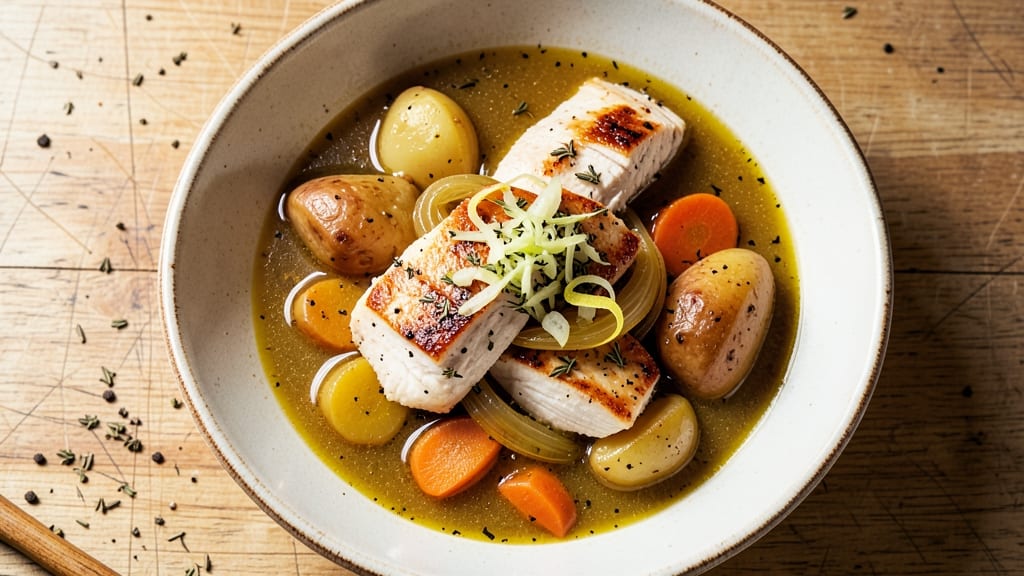
This bronchitis soup recipe combines time-honored healing ingredients with modern comfort—turmeric’s anti-inflammatory power, ginger’s warming kick, and tender chicken in a broth so soothing it feels like medicine.
The secret lies in slow-simmered broth infused with garlic, onions, and fresh herbs, creating a deeply aromatic base that opens congested passages while nourishing your body. Every spoonful delivers immune-supportive nutrients without overwhelming your system during recovery.
The recipe balances creamy texture from blended carrots and potatoes with a light broth, ensuring easy swallowing while keeping calories in check—a critical factor when appetite is low. Turmeric and black pepper (the pairing that boosts curcumin absorption) work together to reduce inflammation, while ginger’s sharp bite helps clear mucus.
This isn’t just soup; it’s a medicinal meal designed to support your body’s natural healing process while tasting rich enough to satisfy even when you’re not feeling well.
What sets this apart is the two-stage cooking method: first simmering the broth with aromatics for deep flavor, then blending vegetables for a velvety finish that coats the throat without heaviness.
The result is a golden-hued, fragrant soup that steams with warmth—perfect for sipping from a mug while wrapped in a blanket. Each ingredient plays a precise role: chicken provides protein for repair, vegetables offer fiber and vitamins, and the spices create a symphony of healing benefits.
Ready in under 1 hour with minimal prep, this recipe scales effortlessly for leftovers—critical when you’re too fatigued to cook daily. The broth freezes beautifully, so you’ll have a ready-made remedy for those days when even standing feels like too much effort. Let’s build this healing bowl of comfort.
Ingredients for best soup recipe for bronchitis
This golden-hued healing soup combines immune-boosting spices with tender chicken and creamy vegetables for soothing comfort.
| Ingredient | Amount | Notes |
|---|---|---|
| Boneless Chicken Breast 🍗 | 1 ½ lb | Skinless, cut into bite-sized pieces |
| Organic Carrots 🥕 | 4 medium | Peeled, cut into chunks |
| Russet Potatoes 🥔 | 2 medium | Peeled, cut into chunks |
| Yellow Onion 🧅 | 1 whole | Diced, about 1 cup |
| Garlic Cloves 🧄 | 6 cloves | Minced, fresh preferred |
| Fresh Ginger 🌿 | 2 tbsp | Grated, freshly grated preferred |
| Ground Turmeric 🌶️ | 1 ½ tsp | Freshly ground for potency |
| Ground Black Pepper 🌶️ | ½ tsp | Freshly ground, enhances turmeric |
| Fresh Cilantro 🌿 | ¼ cup | Chopped, stems removed |
| Fresh Thyme 🌿 | 2 sprigs | Or 1 tsp dried thyme |
| Extra-Virgin Olive Oil 🫒 | 2 tbsp | For sautéing aromatics |
| Chicken Broth 💧 | 4 cups | Low-sodium preferred |
| Fresh Lemon Juice 🍋 | 1 tbsp | Brightens flavors |
| Sea Salt 🧂 | 1 tsp | Adjust to taste |
The turmeric and black pepper are non-negotiable here—this pairing maximizes curcumin absorption, which is where the anti-inflammatory magic happens. Penzeys or Spicewalla carry the highest-quality ground turmeric, but the grocery store stuff works too if it's fresh. Fresh ginger is ideal (the Trader Joe's pre-grated kind is a lifesaver), but if you're using dried, double the amount. The chicken should be skinless—skin adds unnecessary fat when you're already dealing with congestion. Look for organic if possible, but any boneless breast will do. For the broth, low-sodium is key; you'll be adding plenty of salt later. I always make double the broth because it freezes so well—just portion into ziplock bags flat for easy stacking.
No fresh ginger? Powdered ginger at half the amount works in a pinch, though it lacks that sharp bite. Swapping carrots for butternut squash adds natural sweetness, but keep the quantity the same. The potatoes can be Yukon gold if you want extra creaminess, but russets are fine too. If you're feeling extra fancy, add a splash of coconut milk at the end for richness without dairy. The cilantro is optional but adds freshness—skip it if you're not a fan. For the thyme, fresh is best, but dried works at one-third the amount. And yes, you can absolutely use pre-minced garlic from a jar if you're short on time, though fresh is always better.
This soup tastes even better the next day as the flavors meld, so make a big batch. Store in glass containers in the fridge for up to 5 days, or freeze portions for 3 months. The broth separates when refrigerated—just stir it back together before reheating. For extra comfort, serve with crusty bread or a sprinkle of nutritional yeast for that cheesy flavor without dairy. If you're feeling really under the weather, double the turmeric and ginger—your future self will thank you.
Why You'll Love This Recipe
- One-Pot Magic: I swear by this—just dump everything in one pot, simmer, and forget about it. No chopping boards to wash, no extra pans, just pure, steamy simplicity while the chicken falls apart on its own.
- Garlic-Glazed Goodness: That caramelized garlic and onion base? It’s the soul of this soup. I’ll be real: I double the garlic cloves now because once you taste it, you’ll never go back to shy measurements.
- Leftovers That Heal: This soup only gets better the next day. Honestly, I make a double batch on Sundays because the flavors meld into something even richer—perfect for when I’m too congested to cook.
- Budget-Friendly Hero: Russet potatoes and chicken breast stretch this recipe into four servings without breaking the bank. Between us, it’s my go-to when I need to feed the family but still want something that tastes like I slaved over it.
Step-by-step instructions for soothing turmeric-ginger immune booster soup
Here's how to craft the ultimate healing broth—packed with anti-inflammatory power and comforting flavors.
Sear the Chicken for Maximum Flavor
Heat the 2 tablespoons extra-virgin olive oil in a large pot over medium-high heat. Add the 1.5 lb boneless chicken breast cut into bite-sized pieces, working in batches if needed to avoid crowding. Let each piece sear for 3-4 minutes until the edges turn golden brown and the chicken releases easily from the pan.
This step builds deep flavor through the Maillard reaction—don't rush it. Once all chicken is seared, remove it from the pot and set aside. The rendered juices will form the base of your healing broth, so don't wipe the pot clean.
Sauté Aromatics Until Fragrant
In the same pot, add the 1 whole yellow onion (diced), 4 medium organic carrots (cut into chunks), and 2 medium russet potatoes (cut into chunks). Cook for 5-6 minutes until the vegetables begin to soften and the onions turn translucent.
Add the 6 cloves minced garlic, 2 tablespoons freshly grated ginger, 1.5 teaspoons ground turmeric, and 0.5 teaspoon ground black pepper. Stir for 30 seconds until the garlic becomes fragrant and the spices bloom—you should smell that warm, earthy aroma that signals their anti-inflammatory properties are ready to work their magic.
Simmer the Healing Broth
Pour in the 4 cups chicken broth and bring the mixture to a gentle boil. Once boiling, reduce heat to low and return the seared chicken to the pot. Add the 2 sprigs fresh thyme and bring to a gentle simmer. Cover and cook for 25-30 minutes until the chicken is fork-tender and the vegetables are completely soft.
Here's where the healing begins—the turmeric and ginger infuse the broth with their powerful anti-inflammatory compounds. Stir occasionally and maintain a gentle simmer—you want the broth to reduce slightly but not evaporate completely.
Finish with Bright, Fresh Flavors
Remove the chicken from the pot and set it aside. Strain the broth through a fine-mesh sieve into a clean pot, pressing gently on the vegetables to extract all their goodness. Discard the solids or compost them.
Return the strained broth to the pot and stir in the 1 tablespoon fresh lemon juice and 1 teaspoon sea salt. Taste and adjust the salt if needed—you want the broth to be seasoned but not overly salty. The lemon juice brightens the flavors and adds a touch of vitamin C to support your immune system.
Serve with Fresh Herbs and Comfort
Shred the cooked chicken using two forks and return it to the pot. Gently stir in the 0.25 cup chopped fresh cilantro just before serving—this adds a fresh, vibrant finish that contrasts beautifully with the warm spices.
Ladle the soup into bowls and serve immediately. The turmeric will give it a beautiful golden hue, while the ginger and thyme add layers of warmth. Each spoonful delivers protein for recovery, antioxidants for healing, and comfort for your throat and lungs.
Pro Tips For Making Best Soup Recipe For Bronchitis
- Boil Chicken Twice: First, poach the chicken breast in simmering water for 12 minutes—just until it’s cooked through but still tender. Then, shred it and return it to the pot to finish cooking in the soup. I learned this the hard way: overcooking chicken in the soup makes it dry and rubbery, which is the last thing you want when you’re congested.
- Slice Carrots Thin: Cut the organic carrots into ¼-inch half-moons, not chunks. They’ll soften faster and release their sweetness into the broth, making the soup more soothing. I used to leave them in big pieces, and the soup always tasted uneven—like some bites were undercooked and others were mush.
- Don’t Crowd the Pot: If you’re using a standard pot, keep the soup ingredients at no more than ⅔ full when simmering. Crowding traps steam, which can make the potatoes turn to glue and the broth turn cloudy. I’ve burned three batches of soup this way—trust me, it’s not worth the cleanup.
- Sauté Onions Low and Slow: Cook the diced yellow onion and minced garlic in olive oil over medium-low heat for 8–10 minutes until deeply golden, not browned. High heat burns garlic and makes onions bitter, which fights the comforting flavors you’re going for. Sounds weird, but it works: the soup tastes richer and more aromatic when you take your time here.
Common mistakes when making this dish
Overcooking the Chicken
One of the biggest mistakes is letting the chicken overcook during the simmering phase. When you push it past 25-30 minutes at a gentle simmer, the meat becomes dry and stringy, losing its tender texture.
I’ve seen people walk away from the stove only to return to rubbery chicken that’s lost all its moisture. Always check for fork-tenderness—it should pull apart easily with minimal resistance. If you’re concerned about undercooking, use a meat thermometer and aim for 165°F internal temperature. 🌡️
Skipping the Sear
Many home cooks skip searing the chicken entirely, thinking it’s not necessary for flavor. But that golden crust from searing builds deep, rich flavor through the Maillard reaction. Without it, your soup will taste flat and one-dimensional.
I recommend working in batches if needed to avoid crowding the pan—this ensures each piece gets that perfect golden brown crust. The rendered juices from searing also form the flavorful base of your broth.
Ignoring the Turmeric-Pepper Pair
The turmeric and black pepper combo is non-negotiable for this healing soup—they work together to maximize the absorption of curcumin, turmeric’s anti-inflammatory compound. I’ve seen people omit the pepper or reduce it, thinking it’s too spicy.
But ½ teaspoon of freshly ground black pepper is all you need to unlock turmeric’s full potential. Without it, you’re missing out on the soup’s primary healing benefit. Trust me, you won’t taste the heat—just the warm, earthy goodness. 💛
Using High-Sodium Broth
Many store-bought chicken broths are loaded with sodium, which can exacerbate congestion and inflammation when you’re sick. I’ve made this mistake myself—using regular broth and ending up with a soup that’s too salty. Always opt for low-sodium broth (or homemade) and adjust the seasoning at the end.
You can also reduce the broth slightly during simmering to concentrate the flavors without adding extra salt. A little goes a long way when you’re already dealing with bronchitis.
Overcrowding the Pot
Adding all the vegetables and chicken to the pot at once can lead to uneven cooking and steaming instead of searing. When the pot gets overcrowded, the temperature drops, and you lose that crucial Maillard reaction that builds flavor.
I’ve seen people end up with soggy onions and undercooked chicken because they didn’t work in batches. Instead, sear the chicken in batches, then add the vegetables in stages. This ensures everything cooks evenly and develops the right texture. ⚡
Not Straining the Broth
Some people skip straining the broth, leaving behind fibrous vegetable bits that can make the soup feel heavy and unappetizing. While you could leave them in for extra creaminess, I recommend straining for a smoother, more elegant texture that’s easier to swallow when you’re congested.
Press gently on the vegetables with a spoon to extract all their flavorful juices—this ensures your broth is packed with nutrients without the texture issues. The result is a silky, golden-hued broth that’s pure comfort in a bowl.
Nutrition facts
Frequently asked questions
Can I make this soup without chicken for a vegetarian version?
Swap the chicken for 1 can (15 oz) white beans or 1 cup firm tofu for protein. Use vegetable broth instead of chicken broth and add 1 cup chopped mushrooms for umami depth. The turmeric, ginger, and garlic will still provide all the healing benefits while keeping it plant-based.
How soon can I eat this soup when I'm sick?
You can enjoy this soup immediately after making it—it's designed to be gentle on your throat and easy to digest. The warm broth helps open nasal passages, while the anti-inflammatory spices work quickly to reduce congestion. For maximum benefit, sip it while still hot to enhance the steam's soothing effects. The first bowl should be your priority when symptoms first appear.
Can I add dairy like milk or cream to make it creamier?
While traditional creamy soups might seem comforting, dairy can thicken mucus for some people with bronchitis. Instead, blend ½ cup of the cooked carrots and potatoes directly into the broth for natural creaminess without dairy. For extra richness, stir in 2 tablespoons coconut milk at the end—it adds healthy fats without dairy's potential drawbacks.
What if I don't have fresh ginger or turmeric?
For ginger, use 1 teaspoon powdered ginger (half the fresh amount). For turmeric, store-bought ground works fine, but check the expiration date—freshly ground is always more potent. If you're missing both, boost healing with extra garlic (8 cloves)** or 1 tablespoon apple cider vinegar (add at the end) for immune support. The soup will still taste great, though the anti-inflammatory benefits will be slightly reduced.
How long will this soup keep in the fridge, and can I freeze it?
Store in an airtight container in the fridge for up to 5 days, though it tastes best within 3 days. For freezing, portion into ziplock bags (lay flat to save space) and freeze for up to 3 months. Thaw overnight in the fridge—never microwave frozen soup directly. The broth may separate when refrigerated; just stir before reheating. Perfect for making ahead when you're feeling under the weather!