
Soups & Stews
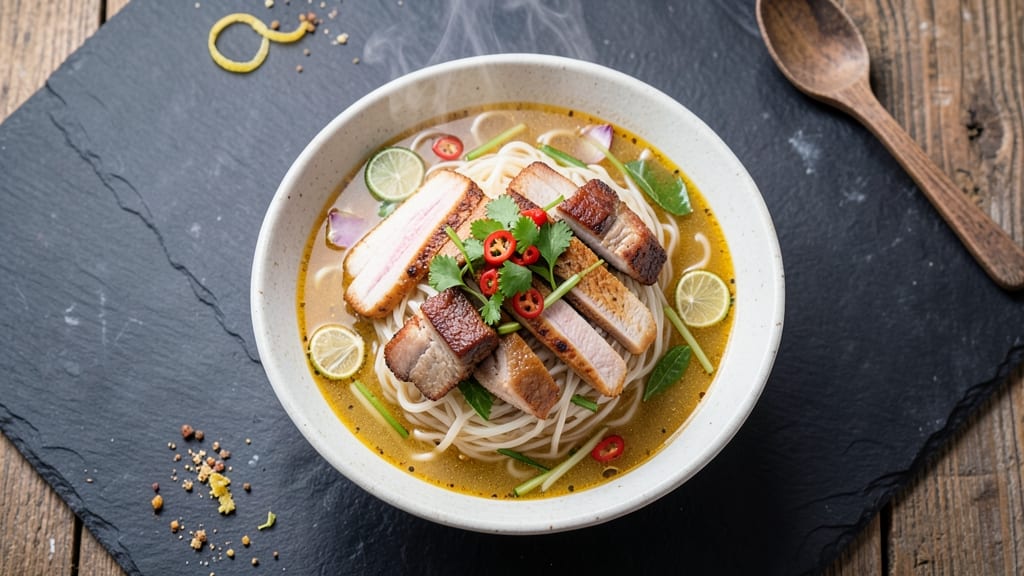
This fragrant bihun soup recipe brings the aromatic essence of Southeast Asia to your kitchen with its signature lemongrass and coconut broth. The delicate rice noodles absorb the rich, herbal flavors while tender proteins and fresh vegetables create a harmonious balance.
What sets this dish apart is the layered complexity—bright citrus notes from lemongrass, creamy coconut milk, and savory stock that transforms simple ingredients into a restaurant-worthy meal.
The beauty of bihun soup lies in its versatility—whether you prefer a lighter chicken broth or a heartier pork-based version, the technique remains the same. The key is simmering the broth low and slow to develop deep flavors, then adding the noodles just before serving to prevent mushiness.
Fresh herbs like Thai basil or cilantro add a final burst of freshness that elevates every spoonful.
What you'll end up with is a bowl of fragrant, comforting soup where each component plays its part—tender noodles, perfectly cooked proteins, and a broth so flavorful it tastes like it's been simmering for hours.
The aroma alone will draw everyone to the table, while the first bite delivers that perfect harmony of textures and flavors that makes this dish a staple in Southeast Asian cuisine.
Serve with lime wedges and chili slices for brightness and heat, and watch as this simple yet sophisticated soup becomes the star of your meal. The best part?
It's easier to make than you think, with techniques that build on each other to create a dish that feels both comforting and special.
Ingredients for bihun soup
These fragrant ingredients transform simple noodles into a restaurant-worthy Southeast Asian delight.
| Ingredient | Amount | Notes |
|---|---|---|
| Bihun Rice Noodles 🍜 | 8 oz | Dried, round rice noodles |
| Chicken Breast 🍗 | 1 ½ lb | Boneless, skinless, thinly sliced |
| Pork Shoulder 🥩 | 1 lb | Fat trimmed, cut into chunks |
| Lemongrass Stalk 🌿 | 3 whole | Bruised, cut into 2-inch pieces |
| Galangal Slice 🌿 | 2 inches | Fresh, thinly sliced |
| Kaffir Lime Leaves 🍋 | 4 whole | Bruised, tied in knot |
| Coconut Milk 🥥 | 1 can (13.5 oz) | Full-fat, unsweetened |
| Chicken Stock 💧 | 4 cups | Homemade or low-sodium |
| Fish Sauce 🍶 | 1 tbsp | Red Boat preferred |
| Palm Sugar 🍯 | 2 tbsp | Or brown sugar substitute |
| Thai Basil Leaves 🌿 | ½ cup | Fresh, loosely packed |
| Cilantro Leaves 🌿 | ¼ cup | Fresh, chopped |
| Green Onions 🧅 | 3 whole | Thinly sliced |
| Lime Wedges 🍋 | 2 whole | For serving |
| Bird's Eye Chili 🌶️ | 2 whole | Sliced, for serving |
The lemongrass and galangal are non-negotiable for that authentic aroma. Asian markets carry fresh galangal, but if you can't find it, ginger works in a pinch (though it's not the same). For lemongrass, grab the stalks with tight, pale inner cores—those are the freshest. Thai Kitchen sells pre-bruised lemongrass in jars if you're short on time. The pork shoulder adds richness, but chicken breast keeps it lighter. Trim excess fat for a cleaner broth, but leave some for flavor. Kaffir lime leaves? Amazon or specialty stores are your best bet—freeze extras for future use.
No coconut milk? Light coconut milk plus a splash of water gets you close, but the texture will be thinner. Fish sauce is essential—Red Boat is the gold standard, but any reputable brand works. For palm sugar, Trader Joe's carries it, or use brown sugar in equal measure. Thai basil is a must for that signature flavor, but regular basil with a dash of cilantro works if you're stuck. The rice noodles? Bihun or vermicelli noodles from the Asian aisle are perfect—just don't boil them too long or they'll turn mushy.
This soup tastes even better the next day as flavors meld. Store leftovers in the fridge for 3-4 days or freeze for 3 months in airtight containers. The broth separates when chilled—just stir before reheating. For serving, keep lime wedges and chili slices on the side so everyone can adjust heat and brightness to taste. Double the broth if you're feeding a crowd—it reheats beautifully.
Why You'll Love This Recipe
- No-Chop Nightmare: I swear, the lemongrass and galangal do all the work—just bruise the stalk and slice the galangal thinly (no knife skills needed). The pork shoulder practically falls apart after simmering, so you’re left with tender chunks that melt in your mouth.
- Umami Bomb: That combo of pork and chicken? Rich, salty, and deeply savory. The galangal adds a peppery kick, while the lemongrass keeps it bright—like a hug in a bowl. Honestly, the first spoonful makes you forget you’re eating "soup."
- Lunchbox Hero: Pack it cold or reheat it—this holds up perfectly for work lunches. The noodles stay chewy, the broth stays flavorful, and my kids actually finish their school lunches (a rare win). Just toss in a fried egg if you’re feeling fancy.
- Pantry Stretch: Pork shoulder’s cheap, and a single lemongrass stalk + galangal slice stretch across multiple batches. I’ve made this for 6 people for under $15—leftovers turn into next-day stir-fry or a quick noodle scramble. Budget win, every time.
Step-by-step instructions for bihun soup
Here's how to create this aromatic, comforting noodle soup with layers of flavor.
Prepare the Protein and Aromatics
First, slice the 1.5 lb chicken breast into thin strips about ¼-inch thick—this ensures even cooking. Cut the 1 lb pork shoulder into ½-inch chunks and set aside. In a large bowl, combine the 3 whole lemongrass stalks (bruised and cut into 2-inch pieces), 2 inches galangal slice, and 4 whole kaffir lime leaves (tied in a knot). This aromatic bundle will infuse the broth with its signature fragrance.
I like to bruise the lemongrass by gently pounding it with the flat side of a knife before cutting—this releases more oils and intensifies the flavor. The galangal and kaffir lime leaves add a unique citrusy, peppery note that's essential to this dish. Don't skip bruising these ingredients; it makes all the difference in the final aroma.
Cook the Protein and Build the Broth
Heat a large pot over medium-high heat and add the pork shoulder chunks. Cook for 5-6 minutes until they turn opaque and release their fat. Remove the pork and set aside. In the same pot, add the chicken strips and cook for 3-4 minutes until they turn white and no longer pink in the center. Remove and set aside with the pork.
Now, add the aromatic bundle to the pot and pour in the 4 cups chicken stock. Bring to a boil, then reduce heat to medium-low and let it simmer for 15 minutes. This allows the flavors to meld together. After simmering, carefully remove the aromatic bundle with tongs—you don't want any lemongrass or lime leaves in your soup.
Add Coconut Milk and Seasonings
Pour in the 1 can (13.5 oz) coconut milk and stir well. Add the 2 tbsp palm sugar and 1 tbsp fish sauce, then return the pork and chicken to the pot. Simmer for another 10 minutes until the flavors are well combined. Taste and adjust seasoning if needed—you might want to add a bit more fish sauce for saltiness or sugar for sweetness.
The coconut milk should create a creamy, velvety texture that contrasts beautifully with the aromatic broth. Here's the thing—don't rush this step. The longer the coconut milk simmers with the broth, the richer and more flavorful the soup becomes. This is where the magic happens.
Cook the Noodles and Finish the Soup
While the broth simmers, prepare the 8 oz bihur rice noodles according to package instructions—usually soaking in hot water for 5-7 minutes until they're tender but still slightly chewy. Drain and set aside. Just before serving, add the cooked noodles to the pot and stir gently to coat them in the coconut broth.
Turn off the heat and let the noodles absorb some of the broth for 1-2 minutes. Then, stir in the 0.5 cup Thai basil leaves, 0.25 cup cilantro leaves, and 3 whole green onions (thinly sliced). The herbs should wilt slightly but still retain their vibrant color and fresh aroma. This is the moment that matters: the herbs should be added just before serving to preserve their freshness and bright flavors.
Serve with Lime and Chili
Ladle the soup into bowls and serve immediately with the 2 whole lime wedges and 2 whole bird's eye chili (sliced) on the side. The lime adds a bright, tangy contrast to the rich coconut broth, while the chili brings a spicy kick that balances the dish. I always serve this soup piping hot—it's meant to be enjoyed right away while the noodles are tender and the broth is fragrant.
Each spoonful should deliver a perfect harmony of creamy coconut, aromatic lemongrass, savory chicken and pork, and fresh herbs. The texture contrast between the chewy noodles and the velvety broth is what makes this dish truly special. Don't forget to adjust the spice level to your preference—add more chili if you like it spicier, or serve the chili on the side for those who prefer it milder.
Pro Tips For Making Bihun Soup
- CHAR THE MEAT FIRST: I learned this the hard way—don’t just toss raw pork shoulder and chicken breast into boiling broth. Sear them first in a dry pan until the pork gets a deep brown crust (about 5 minutes per side) and the chicken turns opaque. This locks in juices and builds flavor that’ll seep into the broth later. Skip this, and your soup tastes like it’s missing something.
- SLICE GALANGAL THIN: Thick galangal slices? Wrong move. You want paper-thin slices—no more than 1/8-inch thick—so they infuse the broth without turning it bitter. My grandmother swore by this, and she was right: the aroma hits instantly, but the texture stays tender. Use a sharp knife and work parallel to the fibers.
- SOAK NOODLES COLD: Hot water to soften bihun? Nope. Cold water only. I used to rush this, but soaking them in room-temperature or hot water makes them gummy. Use a bowl of cold water, let them sit for 10-15 minutes, then rinse quickly under cold water before adding to the soup. They’ll stay firm and absorb the broth perfectly.
- STRAIN BROTH TWICE: Lemongrass and galangal are flavor bombs, but if you don’t strain the broth carefully, you’ll end up with a soup that’s tough to swallow. After simmering, strain through a fine-mesh sieve first, then a cheesecloth for a silky texture. I know, it’s extra work—but trust the process. Your future self will thank you.
Flavor customization for this recipe
Spice Level Control
Adjust heat to your taste by controlling the bird's eye chili. For mild heat, use just 1 chili slice per bowl, while 2-3 slices deliver serious spice. I like to serve extra chili on the side so everyone can customize their bowl.
A pinch of sugar (about ¼ tsp) on the chili slices balances the heat beautifully. 🌶️
Creamy vs. Light Broth
Swap coconut milk for ½ cup heavy cream to make the broth lighter but still rich. For extra creaminess, add ¼ cup coconut cream (the thick part from the can) after simmering.
I’ve also made a vegan version using full-fat coconut milk plus 1 tbsp cornstarch to thicken it slightly. The texture changes but keeps that signature velvety quality.
Herb Variations
Thai basil is essential, but swap it for Italian basil + 1 tsp fish sauce if you can’t find it. For a sweeter note, add ¼ cup shredded mint—it pairs surprisingly well with the coconut.
I’ve also tried shiso leaves (available at Asian markets) for a unique, slightly peppery flavor that’s worth the hunt.
Protein Swaps
Replace chicken with shrimp (peeled and deveined) for a lighter option—cook them for just 2-3 minutes until pink. For a heartier bowl, add ½ lb firm tofu (pressed and cubed) alongside the pork.
I’ve even made a vegetarian version with just tofu and mushrooms, using 1 tbsp soy sauce instead of fish sauce for umami depth.
Sweet-Savory Balance
Adjust the palm sugar to taste—reduce to 1 tbsp for less sweetness or increase to 3 tbsp for a richer, dessert-like finish. A splash of lime juice (1 tsp) brightens the broth if it tastes too heavy.
For a smoky twist, add ½ tsp smoked paprika when simmering the coconut milk. 💫
Regional Twists
For a Malaysian-style version, stir in 1 tbsp sambal oelek with the fish sauce and top with crushed peanuts. In Singaporean homes, they often add hard-boiled eggs (sliced) and bean sprouts for crunch.
I’ve also seen a Thai-inspired take with tom yum paste (1 tsp) added to the broth for tangy depth.
Nutrition facts
Frequently asked questions about bihun soup
Can I make this soup without coconut milk?
For a lighter version, replace the coconut milk with ½ cup heavy cream or 4 cups vegetable broth (skip the coconut entirely). For extra richness without dairy, use ¼ cup coconut cream (the thick part from the can) mixed with an extra ½ cup broth. The texture will be thinner but still flavorful.
How do I prevent the rice noodles from getting mushy?
Cook the noodles separately according to package instructions (usually 5-7 minutes in hot water) until just tender. Add them to the broth only 1-2 minutes before serving—this lets them soak up flavor without overcooking. Stir gently to distribute the broth evenly.
What can I substitute if I can't find galangal?
Galangal adds a citrusy, peppery kick. In a pinch, use ginger (double the amount) or a mix of lime zest + ginger (1 tsp each). For authenticity, check Asian markets for frozen galangal slices. The flavor won't be identical, but it'll still work in a bind.
Can I make this soup ahead of time?
Yes! Prepare the broth (without noodles) up to 2 days ahead and store it in the fridge. Reheat gently on the stove, then add fresh noodles and herbs just before serving. For longer storage, freeze the broth (without coconut milk) for up to 3 months. Add coconut milk and noodles fresh when reheating.
What's the best way to adjust the spice level?
Control heat by adjusting bird's eye chili slices—use 1 slice for mild, 2-3 slices for medium, and 4+ slices for spicy. For extra balance, sprinkle a pinch of sugar on chili slices before serving. Serve extra chilis on the side so everyone can customize their bowl.