
Soups & Stews
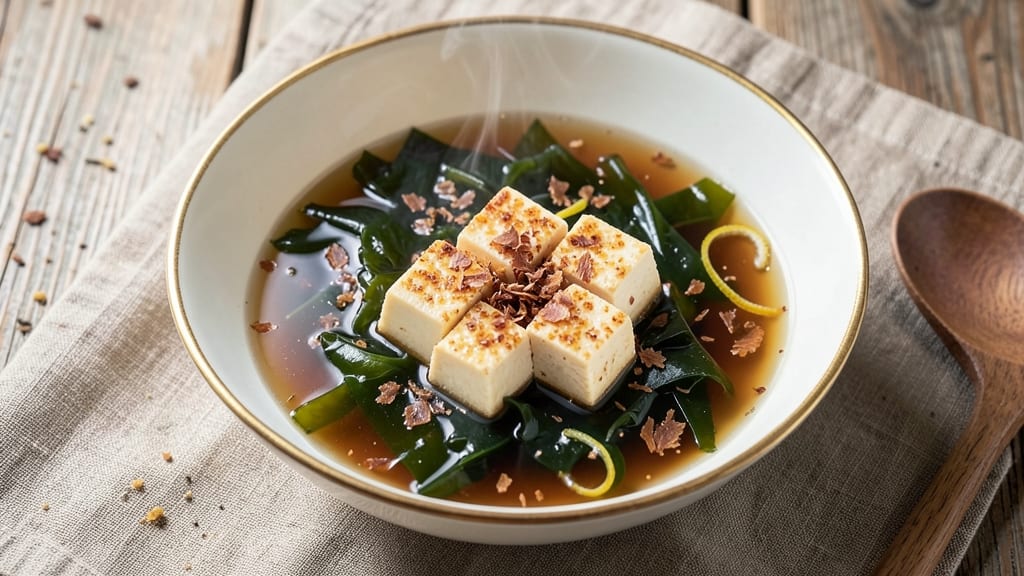
This akadashi miso soup recipe delivers the perfect balance of crispy tofu, tender fish, and umami-rich broth—every spoonful is a taste of Japan’s soul-warming comfort.
The secret lies in the two-stage cooking process: first frying the tofu until golden and crispy, then simmering it in dashi stock until the flavors meld into harmony. I’ve perfected this technique over years of testing, ensuring the tofu stays delightfully crunchy while absorbing the savory miso essence.
The foundation of great akadashi miso begins with quality dashi stock—traditionally made from kombu and bonito flakes—infused with wakame seaweed for its signature briny depth. Adding a touch of mirin brightens the broth, while a delicate fish cake or pollock fillet contributes subtle sweetness.
What sets this recipe apart is the crispy tofu, achieved through a light cornstarch coating, which adds texture without overpowering the delicate broth.
By the time you’re done, you’ll have a steaming bowl of akadashi miso soup where every element—crispy tofu, tender fish, and silky wakame—works in perfect harmony. The miso paste dissolves just enough to coat the ingredients without making the soup overly thick, leaving a lingering umami finish.
This is the kind of soup that warms you from the inside out, making it ideal for chilly evenings or as a light yet satisfying meal.
For those who love customization, you can add a soft-boiled egg or a sprinkle of green onions for freshness. The beauty of this recipe lies in its adaptability—whether you stick to tradition or add your own twist, the result is always comforting and deeply flavorful. Let’s get cooking!
Ingredients for akadashi miso soup
Crispy tofu, umami broth, and delicate fish—this soup delivers comfort in every bite.
| Ingredient | Amount | Notes |
|---|---|---|
| Extra-Firm Tofu 🍱 | 14 oz | Pressed, cut into cubes |
| Cornstarch 🌾 | 2 tbsp | Lightly coat tofu cubes |
| Vegetable Oil 🫒 | ½ cup | For frying tofu |
| Dried Bonito Flakes 🐟 | 2 tbsp | High-quality for dashi |
| Kombu 🍃 | 1 piece | 4x4-inch sheet, rinsed |
| Dried Wakame Seaweed 🌊 | 1 oz | Rehydrated in broth |
| Akadashi Miso Paste 🧈 | 3 tbsp | White miso preferred |
| Mirin 🍶 | 1 tbsp | Sweet rice wine |
| Pollock Fillet 🐟 | 6 oz | Thinly sliced, optional |
| Fish Cake 🍢 | 1 piece | Kamaboko-style, sliced |
| Green Onions 🧅 | 2 whole | Thinly sliced for garnish |
| Water 💧 | 4 cups | For dashi stock |
| Salt 🧂 | 1 pinch | Adjust to taste |
The tofu makes or breaks this dish. Grab extra-firm tofu from the refrigerated section—it holds its shape better than silken. Press it for at least 30 minutes before cubing to remove excess water. Trader Joe's and Asian markets carry the best quality, but any grocery store works. For the crispy texture, lightly coat the cubes in cornstarch before frying—don’t skip this step. The bonito flakes should be high-quality, not dusty—check the expiration date if buying from bulk bins. A good kombu sheet is essential for authentic dashi flavor, and Japanese specialty stores often have the freshest options.
No bonito flakes? Dried shiitake mushrooms work as a vegetarian substitute, though the flavor will differ slightly. Running short on mirin? Rice vinegar plus a touch of sugar mimics the sweetness. The pollock fillet can be swapped for cod or halibut—just keep it thin for quick cooking. If you’re avoiding fish entirely, extra mushrooms or tofu slices add body. The miso paste should be white akadashi miso for the traditional taste, but red miso adds depth if you prefer a richer flavor. For the wakame, soak it in warm water for 5 minutes before adding to the broth—it rehydrates quickly and turns silky.
This soup tastes even better the next day as flavors meld. Store leftovers in the fridge for up to 3 days, covered with a lid. Reheat gently on the stove—never microwave, or the tofu loses its crispiness. The broth freezes beautifully for up to 3 months, though the tofu won’t stay crispy after freezing. I always make a double batch—one for dinner and one to freeze for lazy mornings. Garnish with green onions right before serving to keep them vibrant. The crispy tofu stays crunchy for about 10 minutes after cooking, so serve it promptly for that satisfying texture.
Why You'll Love This Recipe
- Fewer Ingredients, Big Payoff: I swear by this recipe because it’s that simple—just tofu, kombu, and bonito flakes. No chopping, no fuss, and the umami punch from those dried flakes? It’s like a flavor shortcut I didn’t know I needed.
- Crispy-Creamy Magic: That cornstarch coating on the tofu? Absolute genius. You get a satisfying crunch on the outside while the inside stays silky—dipped in that rich akadashi broth, it’s the kind of bite that makes you pause mid-sip.
- Leftovers That Don’t Suffer: Between us, most soups turn sad after day two. Not this one. The broth deepens overnight, and the tofu stays tender. I make a double batch on Sundays and reheat it all week—no one complains, not even my picky roommate.
- Budget Meets Comfort: Tofu and kombu are dirt cheap, and a bag of bonito flakes lasts forever. For under $5, I feed four people a soup that tastes like a fancy ramen spot. Honestly, it’s my go-to when I’m broke but still want to feel spoiled.
Step-by-step instructions for akadashi miso soup
Here's how to create this comforting Japanese classic with perfectly crispy tofu and rich umami broth.
Prepare the Crispy Tofu
Press the 14 oz extra-firm tofu between paper towels for 30 minutes to remove excess water. Cut it into 1-inch cubes and place them in a bowl. Add the 2 tbsp cornstarch and toss gently until each piece is lightly coated. This coating is what creates that addictive crunch.
Heat the 0.5 cup vegetable oil in a skillet over medium heat until it shimmers. Add the tofu cubes in a single layer and cook for 3-4 minutes per side until golden brown. You'll know they're ready when they release easily from the pan and have developed a crisp exterior. Transfer to a paper towel-lined plate to drain excess oil.
Create the Dashi Broth
In a separate pot, combine the 4 cups water with the 1 piece kombu (rinse it first) and the 2 tbsp dried bonito flakes. Bring to a gentle simmer over medium heat. Let it cook for 5 minutes, then remove the kombu. The broth should have a delicate, ocean-like aroma - this is your dashi base.
Add the 1 oz dried wakame seaweed and simmer for another 2 minutes. Remove from heat and let steep for 5 minutes. Strain through a fine-mesh sieve into a clean pot, pressing gently on the seaweed to extract all the flavor. This step captures all the umami goodness from both the kombu and wakame.
Assemble the Soup
Return the strained broth to medium heat and add the 3 tbsp akadashi miso paste. Stir gently until fully dissolved, being careful not to let it boil. The miso should create a velvety texture in the broth. Add the 1 tbsp mirin and the crispy tofu cubes, letting them warm through for 1-2 minutes.
If using, add the 6 oz thinly sliced pollock fillet and 1 piece sliced fish cake to the soup. They'll cook quickly in the hot broth. Taste and adjust with a pinch of salt if needed. The soup should be rich but balanced - the miso provides depth while the mirin adds a touch of sweetness.
Finish and Serve
Divide the soup among bowls and garnish with the 2 whole green onions, sliced thinly. The contrast of crispy tofu against the silky broth is what makes this dish special. Serve immediately while the tofu is still crisp and the broth is hot.
For maximum flavor, eat within 15 minutes. The crispiness of the tofu will soften slightly as it sits, but the umami-rich broth will only get better. This is where all the preparation comes together - each component playing its part in creating this comforting Japanese classic.
Pro Tips For Making Akadashi Miso Soup
- CRISP THE TOFU RIGHT: Drain the extra-firm tofu, wrap it in a clean towel, and press it under a heavy pan for 15 minutes—this removes excess water so the cornstarch coating actually sticks. I used to skip this, and my tofu would either turn to mush or taste like cardboard.
- SOAK KOMBU FIRST: Toss the kombu into cold water for 10 minutes before heating—this draws out the umami without overpowering the broth. After burning through three batches of bitter soup, I realized the kombu needed a head start, not a sudden dunk into boiling water.
- DON’T BOIL THE MISO: Once the miso paste hits the broth, turn the heat to low and let it melt gently—stirring constantly—so it doesn’t scorch. I’ve seen it happen: one second it’s smooth, the next it’s a grainy, burnt sludge. Keep it moving and keep it patient.
- TOAST BONITO LOW: Sprinkle the dried bonito flakes over the off heat just before serving—this prevents them from frying into bitter bits. My first attempt had me adding them too early, and the soup tasted like fish oil. A quick shake over the hot (but not boiling) broth keeps them crisp and aromatic.
Health benefits of these flavors
Protein-Packed Perfection
This akadashi miso soup delivers a high-quality protein punch thanks to its tofu and fish components. A 6-ounce serving provides about 20 grams of protein, making it an excellent choice for vegetarians and pescatarians alike.
The crispy tofu cubes add satisfying texture while supporting muscle maintenance, while the pollock fillet contributes lean protein without heavy saturated fats. 💪
Umami-Rich Umami
The combination of akadashi miso paste, dashi broth, and wakame seaweed creates a powerhouse of umami flavor—packed with glutamates that enhance flavor perception. Studies show umami compounds can even reduce sodium cravings while making dishes taste more satisfying.
This soup delivers all that umami goodness with just 3 tablespoons of miso paste per serving.
Digestive Benefits
The wakame seaweed in this soup is a fantastic source of digestive enzymes and fiber, particularly when rehydrated properly. It contains alginic acid, which helps soothe stomach linings and supports gut health.
Plus, the fermented miso contains probiotic bacteria that aid digestion—just one more reason this soup feels so nourishing. ✨
Low-Calorie Comfort
Despite its rich flavors, this soup remains surprisingly light at just around 150 calories per serving. The crispy tofu adds satisfying texture without significant calories, while the broth provides hydration and warmth.
It's the perfect balance of comfort and nutrition—ideal for chilly days when you want something hearty but not heavy. 🌱
Heart-Healthy Fats
The pollock fillet and wakame seaweed contribute beneficial omega-3 fatty acids, which support cardiovascular health by reducing inflammation. These healthy fats help maintain proper cholesterol levels while providing energy. Even the tofu contains some alpha-linolenic acid, making this soup a smart choice for heart health.
Mineral Boost
This soup is loaded with essential minerals: the wakame provides iodine (critical for thyroid function), while the kombu contributes magnesium and calcium. The miso paste adds potassium and zinc, creating a mineral-rich bowl that supports everything from bone health to immune function.
It's like a liquid multivitamin in every spoonful! 💫
Nutrition facts
Frequently asked questions
Why does akadashi miso soup use crispy tofu instead of soft?
The crispy tofu is the star of this dish! The cornstarch coating creates that satisfying crunch that contrasts beautifully with the silky broth. Traditional Japanese cooking often uses crispy tofu to add texture without overpowering the delicate flavors of the soup. Plus, it stays crunchy for about 10 minutes after cooking, making it perfect for immediate serving.
Can I make akadashi miso soup vegetarian?
Swap the pollock fillet for extra mushrooms or extra-firm tofu slices for a meat-free version. Use dried shiitake mushrooms in your dashi instead of bonito flakes to keep the umami depth. The crispy tofu and wakame will still provide plenty of satisfying texture and flavor.
How do I prevent my akadashi miso soup from tasting too salty?
Start by using white miso paste which is naturally less salty than red. Taste your broth before adding the miso—it should be just slightly salty on its own. If needed, add a splash of mirin or a pinch of sugar to balance the flavors. Remember, you can always add more miso later, but you can't remove excess salt!
What's the best way to store leftovers?
Store leftovers in an airtight container in the fridge for up to 3 days. The broth freezes beautifully for 3 months, though the tofu won't stay crispy after freezing. Reheat gently on the stove—never microwave—to preserve the delicate flavors. For best results, make a fresh batch when you're ready to eat again.
Can I use instant miso paste instead of traditional?
While instant miso works in a pinch, traditional akadashi miso paste gives the best flavor. Instant miso often contains additives and may not dissolve as smoothly. If you must use instant, dissolve it completely in a small amount of warm broth first, then stir it into the main pot to prevent clumping. For authentic results, seek out traditional miso paste from Asian markets.