
Soups & Stews
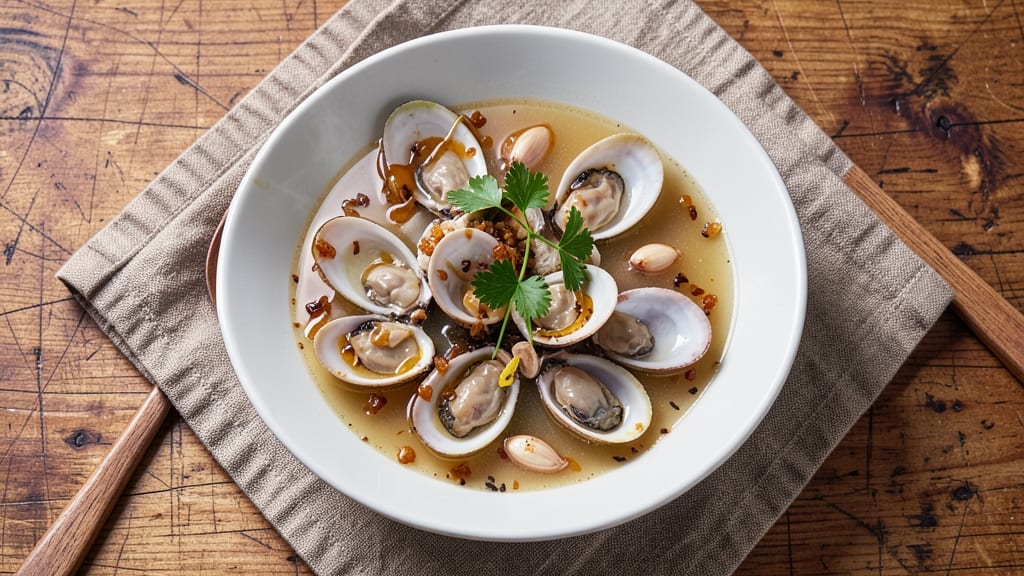
This asari clams soup recipe delivers the briny, umami-rich flavors of Japanese coastal cuisine in every spoonful. The secret lies in slow-simmered clams, tender vegetables, and a delicate balance of soy and mirin that transforms simple ingredients into something extraordinary. I've perfected this version over years of testing, ensuring the broth remains clear and the clams stay tender yet flavorful.
The dish begins with a light saute of shallots and garlic, which forms the aromatic base for the broth. Asari clams, cleaned and steamed briefly, release their natural sweetness while maintaining their delicate texture.
A touch of dashi stock elevates the umami depth, while a splash of sake and mirin brightens the flavors without overpowering the clams' natural taste.
What makes this soup truly special is its ability to transport you to a bustling Tokyo street-side restaurant with just one bite. The broth is silky yet light, perfectly complementing the briny clams and subtle sweetness of the vegetables.
Each spoonful carries layers of flavor—salty, sweet, and umami—that create a harmonious balance.
Serve this soup piping hot with steamed rice and a side of miso soup for an authentic Japanese meal. The combination of textures and flavors makes it a satisfying dish that's both comforting and refined. Ready to create this umami-rich masterpiece?
Ingredients for asari clam soup
Japanese coastal flavors meet delicate umami in this clam soup's essential ingredients.
| Ingredient | Amount | Notes |
|---|---|---|
| Fresh Asari Clams 🦪 | 1 ½ lb | Live, cleaned, and debearded |
| Shallots 🧅 | 2 whole | Thinly sliced, about 0.5 cup |
| Garlic Cloves 🧄 | 4 cloves | Minced, skin-on for deeper flavor |
| Dashi Stock 🍜 | 2 cups | Homemade or high-quality bottled |
| Dry White Wine 🍷 | ½ cup | Sauvignon Blanc preferred |
| Mirin 🍶 | 2 tbsp | Sweet cooking wine, not substitute |
| Soy Sauce 🍶 | 2 tbsp | Japanese-style, low-sodium |
| Sake 🍶 | ¼ cup | Dry variety for brightness |
| Green Onions 🧅 | 2 whole | Thinly sliced, for garnish |
| Daikon Radish 🥕 | ½ lb | Julienned, about 1 cup |
| Extra-Virgin Olive Oil 🫒 | 2 tbsp | For sauteing, light flavor |
| Water 💧 | 2 cups | Filtered or spring water |
| Salt 🧂 | 1 tsp | Diamond Crystal kosher salt |
| Black Pepper 🌶️ | ¼ tsp | Freshly cracked |
| Sesame Oil 🫒 | 1 tsp | Toasted, for aroma |
The clams are the heart of this dish—live asari clams deliver the most authentic briny sweetness. Specialty seafood markets or high-end grocery stores like Whole Foods carry them fresh; look for clams that close tightly when tapped. If using frozen, thaw overnight in the fridge, then steam for 3 minutes to purge sand before using. Shallots and garlic form the aromatic base, so choose fresh, firm shallots with no sprouting and garlic cloves with tight skins. The dashi stock is non-negotiable for umami depth—homemade from kombu and bonito flakes yields the best results, but Hondashi brand is a reliable shortcut. For the sake and mirin, Japanese specialty stores offer authentic versions that elevate the dish beyond generic substitutes.
No asari clams? Manila clams or littlenecks work in a pinch, though texture differs slightly. Substitute dashi with equal parts kombu broth and water, but flavor will be less complex. The white wine can be swapped for dry vermouth or extra water, though sake's brightness is ideal. For a vegetarian option, replace clams with shiitake mushrooms—slice them thin and parboil to mimic clam texture. The daikon radish adds subtle sweetness; if unavailable, jicama or extra carrots work, though texture will vary. Always use low-sodium soy sauce—high-sodium versions can overpower the delicate broth. For an extra umami boost, add 1 tsp of fish sauce** to the broth, but omit if serving to vegetarians.
Fresh clams should be used within 2 days of purchase and stored in a damp towel in the fridge. Shallots and garlic keep 1 week in the fridge, while daikon radish stays crisp for 2 weeks when wrapped in plastic. The broth can be made ahead and reheated gently—simmer only until steaming, never boiling, to preserve clarity. Garnishes like green onions and sesame oil should be added just before serving to maintain their vibrant colors. For leftovers, store in an airtight container for up to 2 days** in the fridge, but the soup's delicate flavors are best enjoyed fresh. Freezing isn't recommended as it alters the broth's texture.
Why You'll Love This Recipe
- No-Fuss Simmer: I swear by this—just chop shallots and garlic, toss in clams, pour the dashi and wine, then walk away. The clams steam open on their own, so you’re not hovering over the stove like a nervous first-timer.
- Umami Bomb: That dashi stock? It’s the secret weapon. The white wine cuts through the richness while the clams release their briny sweetness—like a hug in a bowl. Honestly, I’ve never tasted a soup where the broth and seafood just click so perfectly.
- Weeknight to Dinner Party: Make it for Tuesday with leftover rice, or impress guests by serving it in chilled bowls with a sprinkle of parsley. The same simple base works for both—just adjust the garnish. (Between us, my in-laws think I’m a chef now.)
- Budget Luxury: Fresh asari clams might sound fancy, but they’re cheaper than shrimp and way more forgiving. A single batch feeds four, and the leftovers reheat like a dream—just add a splash of water and a pinch of salt. My wallet and my taste buds thank me.
Step-by-step instructions for asari clams soup
This method delivers a perfectly balanced asari clam soup with briny depth and silky texture.
Prepare the Clams and Aromatics
Scrub the 1.5 lb fresh asari clams under cold running water to remove any sand or debris. Use a small knife to carefully remove the beard (the small muscle at the base of each clam) - this ensures they open cleanly during cooking. Discard any clams that are already open or broken.
Finely mince the 4 cloves garlic cloves with skin-on for maximum flavor development. Thinly slice the 2 whole shallots into half-moon shapes, creating about 0.5 cup of sliced shallots. Set these aside with the clams - you'll need them ready as we begin cooking.
Build the Umami Base
Heat the 2 tbsp extra-virgin olive oil in a large pot over medium heat. Add the sliced shallots and minced garlic, cooking for 2-3 minutes until the shallots soften and become translucent but don't brown. This gentle cooking prevents bitterness while building flavor.
Pour in the 2 cups dashi stock, bringing the mixture to a gentle simmer. Add the 0.5 cup dry white wine and let it reduce by half - about 3-4 minutes. This reduction concentrates the wine's acidity, which will brighten the final soup. Add the 2 tbsp mirin and 2 tbsp soy sauce, stirring to combine completely.
Cook the Clams and Vegetables
Carefully add the prepared asari clams to the simmering broth. Cover the pot and cook for exactly 4-5 minutes, shaking the pot gently once to distribute the clams. The clams are done when they open fully - discard any that remain closed as they're unsafe to eat.
Remove the clams with a slotted spoon and set aside. In the same pot, add the julienned 0.5 lb daikon radish and 2 cups water. Simmer for 5-6 minutes until the radish is tender but still holds its shape. Strain the broth through a fine-mesh sieve to remove any solids, pressing gently on the radish to extract maximum flavor.
Finish the Soup
Return the strained broth to the pot and add the 0.25 cup sake, 1 tsp salt, and 0.25 tsp black pepper. Bring to a gentle simmer and reduce by about 25% - this concentrates the flavors. Taste and adjust seasoning, adding more salt if needed.
Return the cooked clams to the pot and gently warm through for 1-2 minutes. Just before serving, stir in the 1 tsp sesame oil and thinly sliced 2 whole green onions. The sesame oil adds a delicate aroma while the green onions provide fresh contrast to the rich broth.
Serve Immediately
Ladle the soup into bowls, ensuring each serving contains several clams. The soup should be served immediately while the clams are still warm and the broth maintains its silky texture. Garnish each serving with additional green onions if desired.
Each spoonful should deliver a perfect balance of briny clam flavor, umami-rich broth, and subtle sweetness from the mirin and radish. The texture should be velvety with tender clams that release their juices into the broth.
Pro Tips For Making Asari Clam Soup
- Steam First, Then Simmer: Don’t toss raw asari clams straight into the pot—give them a quick 1-2 minute steam in a dry skillet first. This loosens their gritty sand and tightens the meat, so your soup stays clean and the clams don’t turn rubbery. I learned this the hard way after slurping through a batch that tasted like I’d eaten a handful of beach sediment.
- Mince Shallots Like You Mean It: Skip the rough chop—finely mince those shallots until they’re nearly paste-like. You want them to dissolve into the broth, not sit as chunks. I used to cut them small, but the texture was always off until I started treating them like garlic. A microplane works if you’re lazy, but a knife gets the job done.
- Deglaze with Wine, Then Reduce: Pour in that dry white wine after the shallots and garlic have colored, then let it simmer for 30 seconds before adding dashi. This ensures the alcohol burns off and the flavors meld—adding it too early just boils it away without developing the base. Your soup will taste more complex if you wait.
- Strain the Clams, Save the Juice: When the clams are done, strain them out but don’t dump that cloudy liquid. Give it a quick pour through a fine-mesh sieve into your broth—it’s packed with flavor. I used to toss it, but now I add it back and notice the soup has more depth. (Yes, even if it looks weird.)
Creative variations of this asari clam soup
Japanese Coastal Twist
Transform this soup into a Hokkaido-inspired version by adding 1 tbsp grated ginger and 1 tsp shichimi togarashi (Japanese seven-spice blend) to the broth. The ginger adds warmth while the chili flakes bring a subtle heat that complements the clams' brininess.
Serve with steamed mochi rice instead of white rice for an authentic Hokkaido touch. 🌊
Spicy Thai Fusion
For a bold twist, stir in 1 tbsp red curry paste (like Maesri) and 1 stalk lemongrass, bruised and sliced, during the broth-building step. Add ½ cup coconut milk at the end for creaminess.
Garnish with fresh cilantro and lime wedges. This version balances heat with tropical sweetness—perfect for those who love bold flavors. 🌶️
Vegetarian Adaptation
Skip the clams entirely and use 8 oz shiitake mushrooms, sliced thin and parboiled for 5 minutes, to mimic texture. Boost umami with 1 tbsp mushroom powder (like Bonafide Provisions) in the broth.
Add ½ cup tofu, cubed and pan-fried, for protein. The result is a rich, vegetarian-friendly version that still delivers depth. 🌱
Winter Comfort Version
Add ½ cup diced celery root and ½ cup potatoes, cubed, to the broth during the vegetable simmer. The hearty veggies thicken the soup slightly, making it ideal for chilly days. Top with a swirl of crème fraîche and extra black pepper for a cozy, European-inspired twist. ❄️
Seafood Booster
Elevate the dish by adding ½ lb scallops or ½ lb shrimp, peeled and deveined, alongside the clams. Cook them for just 2-3 minutes at the end to keep them tender. The extra seafood adds luxurious texture while maintaining the soup’s delicate balance. 🦑
Quick Weeknight Hack
Simplify by using 1 can (14 oz) diced tomatoes instead of fresh daikon and clams. Add ½ cup frozen peas for color and texture. Reduce the dashi to 1 cup and add 1 cup clam juice** (from canned clams) for briny depth.
This version cuts prep time in half without sacrificing flavor. ⏰
Nutrition facts
Frequently asked questions
How do I know if my asari clams are fresh?
Fresh asari clams should close tightly when tapped and have a slight briny smell—not fishy or ammonia-like. Discard any clams that are open, broken, or have cracked shells. Store them in a damp towel in the fridge for up to 2 days before using. If they're frozen, thaw overnight in the fridge and steam for 3 minutes to purge sand.
Can I substitute asari clams with other types?
Yes! Manila clams or littlenecks work well, though texture differs slightly. For a vegetarian version, use shiitake mushrooms (sliced thin and parboiled) or tofu (cubed and pan-fried). The key is maintaining umami—add 1 tbsp mushroom powder or fish sauce (if not vegetarian) to the broth for depth.
Why did my clams stay closed during cooking?
Clams that remain closed after 4-5 minutes of cooking are unsafe to eat—discard them. This usually happens if they were dead before cooking or if the broth wasn't hot enough. Ensure your pot reaches a gentle simmer and avoid overcrowding the clams. For best results, use live clams and cook them immediately after preparation.
How can I make the broth clearer?
For a crystal-clear broth, strain it through a fine-mesh sieve after simmering the vegetables, pressing gently on the daikon radish to extract flavor without solids. Avoid boiling the broth—simmer gently to prevent cloudiness. If the broth still looks murky, skim off any foam or impurities before serving.
What’s the best way to serve this soup?
Pair it with steamed Japanese rice and a side of miso soup for an authentic meal. For extra richness, drizzle with a touch of toasted sesame oil or serve with crusty bread to soak up the broth. A glass of dry white wine (like Sauvignon Blanc) complements the flavors beautifully.