
Soups & Stews
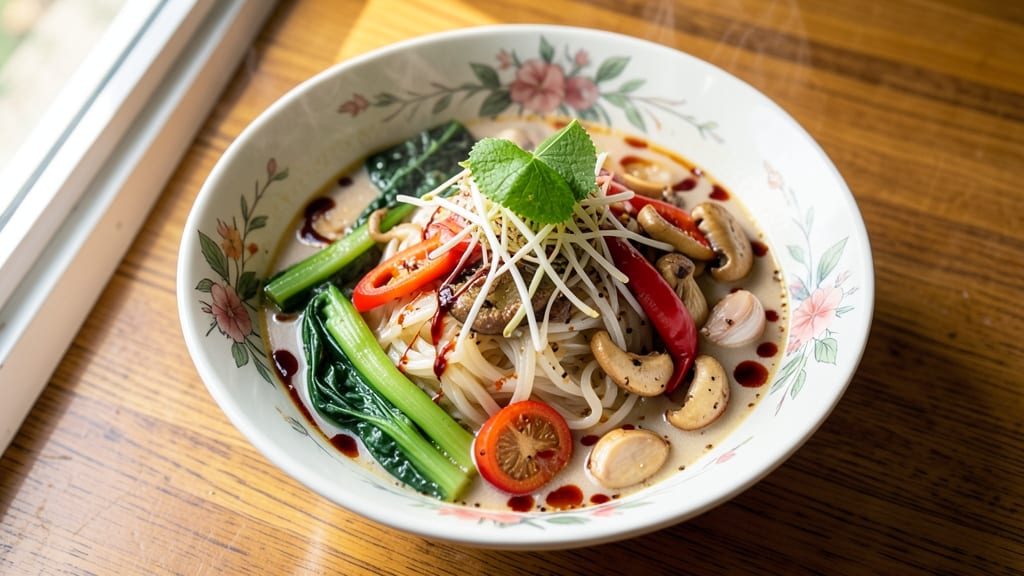
This Asian vegetable noodle soup recipe delivers the kind of aromatic, comforting bowl that transforms a simple meal into a restaurant-worthy experience. The secret lies in the fragrant lemongrass broth, where ginger, garlic, and chili create a layered depth that wraps around silky rice noodles and fresh vegetables.
I developed this recipe during a particularly chilly season when I needed something hearty yet light—a balance that’s both nourishing and quick to prepare.
The broth is where the magic happens, built through slow simmering of aromatic ingredients like lemongrass, galangal, and kaffir lime leaves. These elements infuse the broth with a bright, citrusy warmth that’s impossible to replicate with shortcuts.
The noodles—soft, chewy rice strands—absorb the flavors beautifully, while stir-fried vegetables add texture and freshness. It’s a dish that’s as satisfying as it is adaptable, working equally well as a light lunch or a cozy dinner.
What you’ll end up with is a bowl of soup that’s vibrant, flavorful, and deeply comforting—each spoonful offering a harmonious blend of silky noodles, tender vegetables, and a broth so fragrant it’ll have everyone asking for seconds. The best part?
It’s entirely customizable. Swap in your favorite vegetables, adjust the spice level, or even make it vegan by substituting fish sauce with soy sauce. This recipe is proof that simple ingredients, when combined thoughtfully, can create something extraordinary.
Perfect for meal prepping or serving fresh, this soup is the ideal answer for those days when you crave something warm, flavorful, and effortless. Let’s get started—your taste buds (and leftovers) will thank you.
Ingredients for asian vegetable noodle soup
Fragrant lemongrass, galangal, and kaffir lime leaves create the aromatic broth foundation.
| Ingredient | Amount | Notes |
|---|---|---|
| Lemongrass Stalks 🌿 | 3 whole | Bruised and cut into 2-inch pieces |
| Galangal Root 🌿 | 1 inch | Peeled, thinly sliced |
| Kaffir Lime Leaves 🍋 | 4 whole | Torn into large pieces |
| Fresh Ginger 🧄 | 1 inch | Peeled, thinly sliced |
| Garlic Cloves 🧄 | 6 cloves | Minced for aromatic depth |
| Red Chili Peppers 🌶️ | 2 whole | Thinly sliced, adjust for heat |
| Vegetable Oil 🫒 | ¼ cup | For stir-frying vegetables |
| Thai Eggplant 🍆 | 1 lb | Sliced into 1/2-inch rounds |
| Carrots 🥕 | 2 medium | Julienned into matchsticks |
| Green Beans 🌱 | 1 lb | Trimmed and cut into 2-inch pieces |
| Rice Noodles 🍜 | 8 oz | Flat or round, soaked per package |
| Vegetable Broth 💧 | 6 cups | Homemade or quality store-bought |
| Fish Sauce 🍶 | 1 tbsp | Vegan soy sauce for vegetarian version |
| Lime Juice 🍋 | 2 tbsp | Freshly squeezed |
| Fresh Cilantro 🌿 | ¼ cup | Chopped for garnish |
| Salt 🧂 | 1 tsp | Diamond Crystal preferred |
| Black Pepper 🌶️ | ½ tsp | Freshly ground |
The aromatic trio—lemongrass, galangal, and kaffir lime leaves—are the soul of this soup. Fresh galangal (the ginger-like root) can be tricky to find, but most Asian markets stock it. If unavailable, substitute extra ginger at double the amount—though nothing quite matches its citrusy punch. Kaffir lime leaves add a floral brightness; if you can't find them, lime zest works in a pinch (use half the amount). Lemongrass should be firm and pale—avoid any that feel woody or discolored. For a shortcut, Trader Joe's often carries pre-packaged lemongrass bundles. The fish sauce here is the vegetarian swap—Red Boat or Three Crabs brands are reliable, but any good soy sauce will do if you're strictly plant-based.
No galangal? Double the ginger—it won't be identical, but you'll still get that warm, peppery note. Thai eggplant is ideal for its mild sweetness, but regular eggplant or zucchini works just as well. The carrots and green beans can be swapped for whatever's in season—bell peppers, bok choy, or mushrooms all play nicely. For the rice noodles, stick to the package instructions for soaking time—under-soaking is better than over-soaking, which makes them mushy. The vegetable broth should be flavorful; if using store-bought, Imagine or Pacific Foods brands are top-tier. And yes, fresh lime juice is non-negotiable—bottled just won't cut it.
Broth keeps for 4-5 days in the fridge, but the noodles are best made fresh. If prepping ahead, store the broth and vegetables separately—reheat the broth, then toss in the noodles and veggies just before serving. The lemongrass and galangal can be frozen for up to 3 months if you want to stock up. For extra flavor, save the used kaffir lime leaves—they make a great garnish or can be composted. This soup tastes even better the next day as the flavors meld, so double the batch if you're feeding a crowd.
Why You'll Love This Recipe
- No Chopping Chaos: I swear by this—just smash the garlic, bruise the ginger, and toss in whole lemongrass stalks (no peeling, no fuss). The galangal and kaffir lime leaves? Tear them in, no precision needed. That’s how I make it in 10 minutes while scrolling through my phone.
- Herb-Packed Punch: Between us, this isn’t just "flavor"—it’s a full-body experience. The galangal’s peppery kick, lemongrass’s citrusy whisper, and those kaffir lime leaves? They turn the broth into liquid gold. Honestly, I’ve made it with just the basics and still had people ask for seconds.
- Leftover Goldmine: This soup begs to be made ahead. The flavors deepen overnight, and reheating it? Zero effort. I’ll often double the batch—one for dinner, one for my lazy mornings. (Yes, even on a Tuesday night.) Plus, it’s the kind of dish that tastes better the next day.
- Budget-Friendly Flex: Vegetables stretch for miles here, and those aromatic roots (lemongrass, galangal) go a long way. I’ve made this for under $8 for four servings, and it’s still the star of my meal rotation. No fancy ingredients, just smart layering—garlic, ginger, and a handful of greens do the heavy lifting.
Step-by-step instructions for Asian vegetable noodle soup
Here's how to build this aromatic, fragrant broth that brings together silky rice noodles and vibrant vegetables.
Prepare the Aromatic Base
In a large pot, heat the 0.25 cup vegetable oil over medium heat. Add the 3 whole lemongrass stalks (bruised and cut into 2-inch pieces), 1-inch galangal root (peeled and thinly sliced), 4 whole kaffir lime leaves (torn into large pieces), 1-inch fresh ginger (peeled and thinly sliced), and 6 cloves garlic (minced). Sauté for 3-4 minutes until the aromatics release their fragrance and begin to soften.
Here's the thing—this is where the magic happens. The lemongrass and galangal should perfume the kitchen with their citrusy, piney aroma. If you notice the galangal browning too quickly, reduce the heat slightly to medium-low. Add the 2 whole red chili peppers (thinly sliced) and cook for another 1 minute until they soften slightly but maintain their shape. This step builds the complex flavor foundation that will infuse the entire soup.
Stir-Fry the Vegetables
Push the aromatic base to one side of the pot and add the 0.25 cup vegetable oil if needed. Stir-fry the 1 lb Thai eggplant (sliced into ½-inch rounds) for 3-4 minutes until they begin to soften but still hold their shape. Remove and set aside. In the same pot, add the 2 medium carrots (julienned into matchsticks) and 1 lb green beans (trimmed and cut into 2-inch pieces). Stir-fry for 4-5 minutes until the carrots are tender-crisp and the green beans brighten in color.
Real talk: don't overcrowd the pot. If your vegetables aren't fitting comfortably, work in batches to ensure they develop that beautiful caramelized color. The eggplant should be tender but not mushy—it needs to hold its shape in the final soup. Season the vegetables with ½ teaspoon salt and ¼ teaspoon black pepper while they cook, as this will help balance the flavors in the finished dish.
Build the Fragrant Broth
Return the eggplant to the pot and pour in the 6 cups vegetable broth. Bring to a gentle boil, then reduce heat to medium-low and simmer for 10-12 minutes until the broth has reduced slightly and the flavors meld together. You'll notice the broth develop a rich, golden hue and an intoxicating aroma from the lemongrass and galangal.
This is the moment that matters: taste the broth and adjust seasoning. Add 1 tablespoon fish sauce and 1 teaspoon salt if needed. The broth should be savory with a subtle umami depth. If you're using a vegetarian version, ensure the fish sauce substitute provides enough saltiness. Simmer for another 2-3 minutes to let the seasonings fully incorporate.
Cook the Rice Noodles
While the broth simmers, prepare the 8 oz rice noodles according to package instructions. Typically, this means soaking them in warm water for 10-15 minutes until they're pliable and tender. Drain any excess water and set aside. The noodles should be soft but still hold their shape—over-soaking will make them mushy.
Here's a pro tip: if your rice noodles aren't absorbing water quickly enough, cover the bowl with a damp towel to help them soften more evenly. Once cooked, add the noodles to the pot with the broth and vegetables. Gently stir to combine and let everything simmer together for 2-3 minutes to heat through. The noodles should absorb some of the broth but remain distinct and silky.
Finish and Serve
Remove the pot from heat and stir in the 2 tablespoons lime juice. This brightens the broth and cuts through the richness of the vegetables and noodles. Taste and adjust seasoning one final time—you might need a touch more fish sauce or lime juice to balance the flavors. Ladle the soup into bowls and garnish each serving with ¼ cup fresh cilantro (chopped).
Serve immediately while the noodles are still warm and the broth is fragrant. The soup should be vibrant with layers of flavor—citrusy from the lemongrass and lime, earthy from the galangal and ginger, and fresh from the cilantro. Each bite should deliver a perfect balance of textures: silky noodles, tender vegetables, and a rich, aromatic broth. Enjoy with a side of steamed jasmine rice if you're still hungry!
Pro Tips For Making Asian Vegetable Noodle Soup
- Char the Aromatics: Blister your garlic, ginger, and galangal slices in a dry pot for 30 seconds before adding broth—this deepens their flavor without burning. I used to skip this, and the soup always tasted flat until I tried it.
- Slice Galangal Thin: Use a mandoline or sharp knife to shave galangal into paper-thin slices (¼-inch thick). Thicker chunks stay tough and underseasoned, while thin slices dissolve into the broth for that signature citrusy bite.
- Simmer, Don’t Boil: Keep the broth at a gentle simmer (tiny bubbles, just breaking the surface) after adding noodles. Boiling turns them mushy, and the broth loses its delicate balance of aromatics—especially the lemongrass and kaffir lime.
- Toast Kaffir Lime Leaves: Lightly char the kaffir lime leaves in a dry pan for 10 seconds per side before tearing them into the broth. This unlocks their citrusy oils and prevents them from tasting like soap—yes, I’ve ruined a batch by skipping this.
Flavor customization for this recipe
Spice Level Control
Adjust the heat to your preference by modifying the red chili peppers. For a mild bowl, use 1 chili pepper or remove them entirely and add ½ teaspoon sugar to balance. For medium heat, keep the 2 whole peppers as written.
For spicy lovers, add 1-2 extra peppers or a dash of chili crisp at the end. I like to keep a small bowl of chili oil on the table for those who want to add heat after tasting. 🌶️
Vegetable Swaps
Customize your veggies based on what’s fresh or what you love. Swap Thai eggplant for zucchini or bell peppers—they add a sweeter contrast. Bok choy or mushrooms work well for a heartier texture, while snow peas or sugar snap peas bring a crisp bite.
I often use shredded cabbage for extra volume and a slight tang. For a tropical twist, add thinly sliced pineapple or mango in the final minutes of cooking. 🥬
Broth Variations
Transform the broth to match your mood. For a coconut-infused version, add ½ cup coconut milk at the end for creaminess. A miso depth comes from dissolving 1 tablespoon white miso paste into the simmering broth.
For a tangy kick, stir in 1 tablespoon rice vinegar with the lime juice. I’ve also made a ginger-turmeric version by adding 1 teaspoon turmeric and extra ginger for an anti-inflammatory boost. 💛
Protein Additions
Keep it vegetarian or add protein for a heartier meal. Tofu (firm or extra-firm) holds up well—pan-fry cubes until golden before adding to the soup. Shrimp or scallops cook in just 2 minutes and add a luxurious touch.
For a meaty texture, try shredded rotisserie chicken or crumbled tempeh. I love adding soft-boiled eggs (6-minute eggs) for a rich yolk that ties everything together. 🍳
Herb & Garnish Ideas
Fresh herbs elevate the dish instantly. Beyond cilantro, try Thai basil for a licorice note or mint leaves for brightness. A sprinkle of toasted sesame seeds adds crunch, while crushed peanuts give a nutty contrast.
For a smoky finish, drizzle with chili oil or a sprinkle of smoked paprika. I always keep a small bowl of lime wedges on the table—squeezing fresh lime over each bowl makes the flavors sing. ✨
Sweet & Tangy Balance
Balance the savory broth with sweet and tangy elements. A drizzle of honey or hoisin sauce adds depth, while pickled vegetables (like carrots or daikon) bring a bright acidity. For a sweet-spicy twist, stir in 1 teaspoon palm sugar with the fish sauce.
I’ve also used mango purée (2 tablespoons) for a fruity sweetness that pairs beautifully with the lemongrass. 🍯
Nutrition facts
Frequently asked questions
Can I make this soup without galangal?
Galangal adds a unique citrusy depth, but you can substitute double the amount of fresh ginger (about 2 inches) for a similar peppery warmth. While it won't be identical, the ginger will still contribute that aromatic punch. For extra complexity, add ½ teaspoon turmeric alongside the ginger to mimic galangal's earthy notes.
How do I prevent the rice noodles from getting mushy?
Noodles go mushy when overcooked or soaked too long. Always follow package instructions for soaking time (usually 10-15 minutes in warm water), and drain them just before adding to the hot broth. For extra insurance, rinse them briefly with cold water after draining. The key is to add them to the soup when it's simmering gently, then cook together for only 2-3 minutes—just enough to heat through.
What's the best way to store leftovers?
Store the broth and vegetables separately in airtight containers in the fridge for up to 4 days. Reheat the broth first, then add fresh noodles when serving to keep them silky. The noodles don't reheat well, so it's best to make them fresh each time. For freezing, only freeze the broth (without noodles) for up to 3 months—thaw overnight in the fridge before using.
Can I make this soup in an Instant Pot?
Yes! Sauté the aromatics and vegetables as directed, then add the broth and set to high pressure for 5 minutes. Quick-release the pressure, stir in the noodles, and cook for another 2 minutes on sauté mode. The Instant Pot will concentrate the flavors faster, but you may need to adjust seasoning slightly since pressure cooking intensifies tastes. Add lime juice at the end as usual.
Why does my broth taste bland?
Bland broth usually means insufficient seasoning or under-simmering.