
Soups & Stews
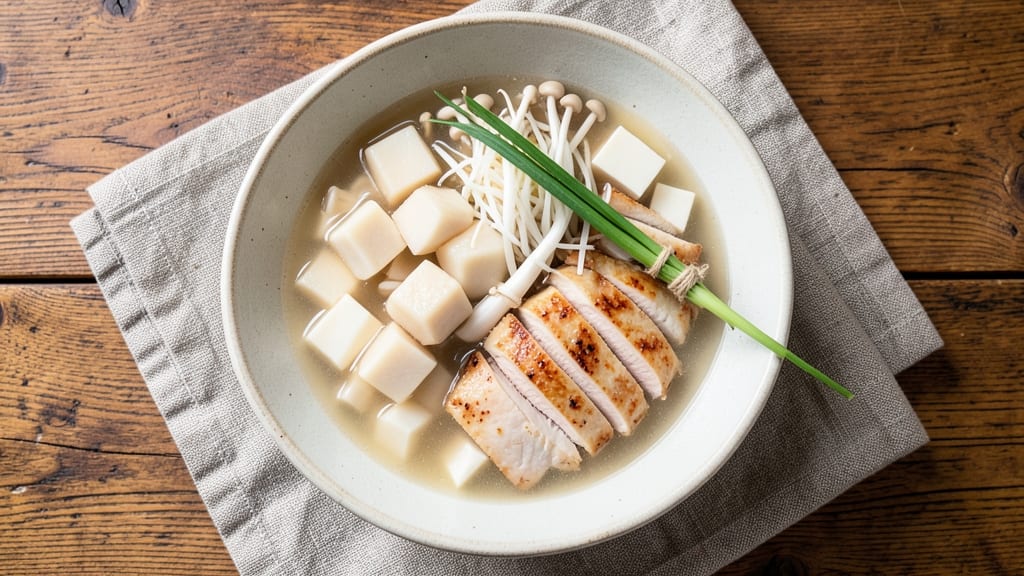
This atama soup recipe delivers the delicate balance of Japanese tradition and comforting warmth—where tender chicken and silky coconut-lemon grass broth create a dish that feels like a hug in a bowl.
The secret lies in the meticulous preparation of the pig brain, a labor of love that transforms it into a velvety, melt-in-your-mouth experience. Every spoonful carries layers of umami from dashi, the bright tang of mirin, and the earthy depth of daikon and mushrooms.
The broth begins with a fragrant base of lemongrass and coconut milk, simmered low and slow to extract maximum flavor without overpowering the delicate ingredients. While the atama and chicken tenderize, the vegetables—shredded daikon, enoki mushrooms, and silken tofu—absorb the aromatic essence, creating a harmonious medley of textures and tastes.
This isn’t just soup; it’s a celebration of Japanese culinary craftsmanship, where each component plays a precise role in the symphony of flavors.
What you’ll achieve is a bowl of tender atama and chicken swimming in a velvety broth that’s rich yet light, with the perfect balance of savory, sweet, and umami. The daikon adds a satisfying crunch, while the mushrooms contribute an earthy depth that ties everything together.
Served in traditional lacquered bowls, this soup becomes a centerpiece for gatherings, offering both nourishment and a taste of cultural heritage.
Perfect for special occasions or when you want to impress with an authentic Japanese experience, this recipe requires patience and attention to detail—but the result is worth every moment. Let’s create a dish that honors tradition while delivering restaurant-quality comfort at home.
Ingredients for atama soup
Elevate your Japanese repertoire with these carefully selected ingredients for authentic atama soup.
| Ingredient | Amount | Notes |
|---|---|---|
| Pig Brain (Atama) 🧠 | 1 lb | Fresh, cleaned and trimmed |
| Boneless Chicken Breast 🍗 | 1 ½ lb | Cut into 1-inch cubes |
| Silken Tofu 🍲 | 1 package (14 oz) | Cut into 1-inch cubes |
| Daikon Radish 🥕 | 1 lb | Julienned or shredded |
| Enoki Mushrooms 🍄 | 1 lb | Stems trimmed, caps left whole |
| Lemongrass 🌿 | 1 whole stalk | Bruised and cut into 2-inch pieces |
| Coconut Milk 🥥 | 1 can (13.5 oz) | Full-fat for creaminess |
| Dashi Stock 🍜 | 4 cups | Homemade or quality bottled |
| Mirin 🍶 | 2 tbsp | Sweet cooking rice wine |
| Soy Sauce 🥢 | 2 tbsp | Japanese style preferred |
| Sesame Oil 🫒 | 1 tbsp | Toasted for aroma |
| Fresh Ginger Root 🧅 | 1 ½ inch | Peeled and sliced thinly |
| Green Onion 🧅 | 2 whole | Thinly sliced for garnish |
| Salt 🧂 | 1 tsp | Adjust to taste |
| White Pepper 🌶️ | ½ tsp | Freshly ground |
The pig brain, or atama, is the soul of this dish. Source it from specialty Asian markets—look for fresh, properly cleaned cuts with minimal odor. If unavailable, high-quality pork brain from a trusted butcher works too, but must be thoroughly cleaned and blanched before use. The chicken breast should be trimmed of fat and cut into even cubes for consistent cooking. Silken tofu adds delicate texture, so opt for the firmest package available—avoid watery varieties. Daikon radish should be fresh and crisp, not woody or yellowing, as it provides the soup's signature crunch. Enoki mushrooms should be long and slender, with caps still tightly closed for maximum tenderness.
No fresh lemongrass? Substitute with 1 tbsp lemongrass paste or 1 tsp lemongrass powder, but fresh delivers superior aroma. Coconut milk can be swapped for light coconut cream if you prefer a richer texture. For dashi stock, homemade kombu-bonito is ideal, but quality bottled brands like Hondashi work well. The ginger should be young and fibrous—older, woody ginger lacks the bright flavor needed here. If you can't find enoki mushrooms, shiitake mushrooms sliced thinly provide a comparable earthy depth. For the sesame oil, toasted sesame oil is non-negotiable—regular oil lacks the nutty aroma that elevates the dish.
The atama and chicken should be blanched immediately upon arrival to remove impurities, then stored in airtight containers in the fridge for up to 3 days. Lemongrass and ginger keep well in the fridge for 1 week wrapped in damp paper towels. The prepared broth without atama can be stored for 4-5 days—simply reheat gently before adding the cooked atama and chicken. For best texture, reheat only until steaming, then let sit covered for 5 minutes before serving. The enoki mushrooms should be added last to maintain their delicate crunch.
Why You'll Love This Recipe
- One-Pot Magic: Honestly, this soup barely needs a recipe—just toss the prepped ingredients into a pot with dashi, simmer until the atama turns tender (about 20 minutes), and boom. The chicken and tofu cook right in the broth, so no extra pans or fuss. Even my "I can't boil water" roommate could handle it.
- Umami Bomb: Between us, the atama is where this soup really shines. That deep, earthy richness from the pig brain—paired with the slight crunch of enoki mushrooms and the subtle sweetness of daikon—creates a flavor combo I can’t get enough of. It’s the kind of taste that makes you pause mid-bite and think, "Why don’t I eat this more often?"
- Weeknight to Potluck: I make this for lazy Tuesday dinners, but it’s also my go-to for gatherings. The silken tofu holds its shape, the chicken stays juicy, and the daikon adds a fresh bite—so it works cold or hot. Bring it to a friend’s place, and you’ll be the hero who didn’t rely on takeout.
- Budget Brain Boost: Atama might sound fancy, but it’s one of the most affordable protein sources out there. A single package stretches into multiple meals, and the chicken and tofu keep it balanced without breaking the bank. Leftovers? Even better—the broth gets richer overnight, and I swear the second day is when it truly hits its stride.
Step-by-step instructions for silky coconut-lemongrass atama soup
Transform delicate ingredients into a velvety broth where each component shines through precise technique.
Prepare the Protein Components
Begin by thoroughly cleaning the 1 lb Pig Brain (Atama) under cold running water, removing any remaining membranes or connective tissue. Trim away any discolored portions and cut into 1-inch cubes. The atama should be completely clean and white - any lingering impurities will affect the broth's clarity.
Cut the 1.5 lb Boneless Chicken Breast into 1-inch cubes as well. Place both proteins in a large bowl and toss with 1 tbsp Sesame Oil, 1 tsp Salt, and 0.5 tsp White Pepper. This marination prevents the proteins from drying out during the long simmer and enhances their natural flavors. Let them rest at room temperature for 15 minutes while you prepare the remaining ingredients.
Build the Aromatic Base
In a large stockpot, combine the 4 cups Dashi Stock and bring to a gentle simmer over medium heat. Add the bruised 1 whole stalk Lemongrass (cut into 2-inch pieces) and 1.5 inch Fresh Ginger Root (thinly sliced). Let this aromatic base infuse for 5 minutes until the liquid develops a subtle citrusy aroma from the lemongrass and gingery warmth.
Add the marinated pig brain (atama) and chicken breast cubes to the simmering broth. The temperature should remain at a gentle simmer - not a rolling boil - to prevent the proteins from toughening. Skim off any foam that rises to the surface during the first 10 minutes of cooking to ensure a clear broth.
Simmer and Develop the Broth
Continue simmering the proteins for 30 minutes, partially covered, until the atama becomes tender and the chicken reaches an internal temperature of 165°F. The broth should reduce slightly but maintain enough volume to coat the back of a spoon. Remove the proteins and set aside, reserving the broth for later.
In the same pot, add the 1 lb Daikon Radish (julienned), 1 lb Enoki Mushrooms (stems trimmed), and 1 package (14 oz) Silken Tofu (cut into 1-inch cubes). Return to a simmer and cook for 10 minutes until the daikon softens and the enoki mushrooms become tender but still retain their delicate texture. The silken tofu will absorb the flavors without breaking apart.
Create the Creamy Coconut-Lemongrass Base
Strain the reserved broth through a fine-mesh sieve into a clean pot, pressing gently on the solids to extract maximum flavor. Return the strained broth to the pot and add the 1 can (13.5 oz) Coconut Milk, 2 tbsp Mirin, and 2 tbsp Soy Sauce. Bring to a gentle simmer and reduce for 10 minutes until the mixture thickens slightly but remains silky - you're aiming for a consistency between heavy cream and light pudding.
Return the cooked proteins, daikon, enoki mushrooms, and silken tofu to the pot. Stir gently to combine, allowing the coconut milk to coat each component evenly. The soup should be luxuriously thick yet still pourable - if it's too thick, add 2-3 tablespoons of hot water to reach your desired consistency.
Finish and Serve
Taste and adjust seasoning with additional salt or white pepper if needed. The balance should be harmonious between the umami from the atama and chicken, the sweetness of the mirin, the saltiness of the soy sauce, and the creamy coconut milk. Ladle the soup into bowls, garnishing each serving with thinly sliced green onion for both visual appeal and fresh contrast.
Serve immediately while the broth remains silky and the ingredients are still warm. Each spoonful should deliver a perfect balance of textures - the tender atama and chicken, the delicate enoki mushrooms, the creamy coconut broth, and the subtle crunch of the daikon. The soup's depth comes from the careful layering of flavors, where each ingredient contributes its unique character without overpowering the others.
Pro Tips For Making Atama Soup
- BLANCH THE ATAMA FIRST: Pig brain needs a quick 3-minute blanch in salted water before simmering—this removes grit and pre-cooks it just enough to keep it tender. Skip this, and you’ll end up with a chewy, rubbery mess that even the broth can’t save.
- SLICE DAIKON THIN AND LENGTHWISE: Cut the daikon into ¼-inch-thick matchsticks along the grain, not across. Thicker slices stay crunchy and dull, while thin, lengthwise cuts soften perfectly in the broth and soak up flavor like a sponge.
- DON’T BOIL THE CHICKEN: Poach the chicken breast in the broth at a gentle simmer (90°C/195°F), not a rolling boil, or it’ll turn out dry and stringy. A meat thermometer hitting 63°C (145°F) internally is your goal—any hotter, and you’ve ruined the texture.
- ADD ENOKI LAST, THEN REMOVE: Toss the enoki into the soup just before serving and let them sit for 30 seconds—this keeps them crisp. Immediately fish them out with a slotted spoon so they don’t turn into mush in the broth. (Yes, it’s annoying, but the contrast makes the dish.)
Perfect pairings for this dish
Broth Enhancers
Elevate your atama soup with complementary broth-based dishes that share its Japanese soul. A side of miso soup with tofu and wakame adds a lighter contrast—its fermented depth complements the coconut-lemon grass notes.
For a heartier pairing, serve ramen with a similar broth base but add chashu pork and soft-boiled eggs to balance the soup’s delicate textures. Both pairings use the same dashi foundation, creating a cohesive dining experience. 🍜
Rice Pairings
Japanese short-grain rice is non-negotiable—its sticky texture soaks up the rich broth beautifully. For an elevated touch, serve with furikake (a mix of sesame seeds, seaweed, and bonito flakes) to add crunch and umami.
Alternatively, try sushi rice with a drizzle of ponzu sauce on the side for a tangy contrast that cuts through the coconut creaminess. The rice should be freshly steamed and served in small lacquered bowls to maintain tradition. 🍚
Vegetable Sides
Add a sunomono salad (Japanese vinegared cucumber salad) to introduce a refreshing crunch and acidity that balances the soup’s richness. Thinly slice cucumbers and carrots, toss with rice vinegar, sugar, and a pinch of red pepper flakes, then chill until serving.
Another great option is blanched bok choy with a sprinkle of toasted sesame seeds—its crisp-tender texture mirrors the enoki mushrooms in the soup. Both sides keep the meal light and visually appealing. 🥬
Garnish Essentials
Fresh garnishes transform the dish from home-cooked to restaurant-worthy. Thinly sliced green onions add a bright pop of color and freshness, while shiso leaves (if available) lend a subtle minty aroma. For extra flair, drizzle with toasted sesame oil just before serving—its nutty depth enhances the coconut flavors.
A sprinkle of furikake or bonito flakes adds a smoky, savory finish that ties everything together. 🌿
Dessert Harmony
End the meal with matcha-flavored mochi or warabi mochi—their chewy texture and earthy matcha notes provide a satisfying contrast to the soup’s creaminess. For a lighter option, serve yuzu sorbet to cleanse the palate with its citrusy brightness.
Both desserts honor Japanese tradition while balancing the meal’s richness. The key is to choose something light yet flavorful to avoid overwhelming the palate. 🍡
Beverage Pairings
Pair your atama soup with a lightly chilled Japanese green tea (like sencha) to complement the dish’s delicate flavors without competing. For a refreshing contrast, try sake (specifically a junmai ginjo)—its subtle sweetness and clean finish enhance the coconut and lemongrass.
Avoid heavy wines or dark beers, as they can overpower the soup’s intricate balance. A glass of sparkling water with lemon also works beautifully for a non-alcoholic option. 🍶
Nutrition facts
Frequently asked questions
Why does traditional atama soup use pig brain instead of other meats?
The pig brain (atama) is prized in Japanese cuisine for its delicate, melt-in-your-mouth texture and rich umami flavor. When properly prepared, it becomes silky and absorbs the broth's flavors beautifully. Historically, it was considered a nutrient-dense delicacy, packed with brain-boosting nutrients like B vitamins and iron. The texture contrast with the creamy coconut broth creates a luxurious dining experience that's hard to replicate with other proteins.
Can I substitute chicken with another protein if I'm uncomfortable using pig brain?
Yes! For a similar texture, try shitake mushrooms (sliced thickly) or firm tofu (pressed and cubed) as the main protein. If you prefer meat, chicken liver or beef tongue (both cleaned and blanched) work well too. The key is choosing ingredients that can achieve the same tender, velvety consistency when simmered. Just adjust cooking times accordingly—mushrooms take 20-25 minutes while tofu needs only 10 minutes in the broth.
How do I properly clean and prepare pig brain for this recipe?
Start by rinsing the brain under cold running water for 5 minutes to remove blood and impurities. Use a spoon to gently scrape away any membranes or grayish tissue from the surface. Cut the brain into 1-inch cubes and blanch in boiling water for 30 seconds, then transfer to an ice bath to stop cooking. This step removes any remaining impurities and prepares it for the long simmer. Always wear gloves when handling raw brain.
What's the secret to getting that perfect silky coconut-lemon grass broth?
The magic happens in three steps: low-and-slow simmering, straining, and proper reduction. Simmer the broth at a gentle bubble (not a rolling boil) for at least 30 minutes to extract maximum flavor. Strain through a fine-mesh sieve to remove any impurities, then reduce the coconut milk mixture until it reaches a pudding-like consistency (about 10 minutes). The key is patience—rushing will make the broth break or become grainy.
Can I make this soup ahead of time and reheat it?
Yes, but with care! Prepare the broth (without the atama) up to 2 days ahead and store it in an airtight container in the fridge. When ready to serve, gently reheat the broth until steaming, then add the cooked atama and chicken. Never boil the reheated soup—just warm through and let it sit covered for 5 minutes before serving. For best texture, add fresh enoki mushrooms and tofu just before serving. The atama will stay tender if reheated properly.